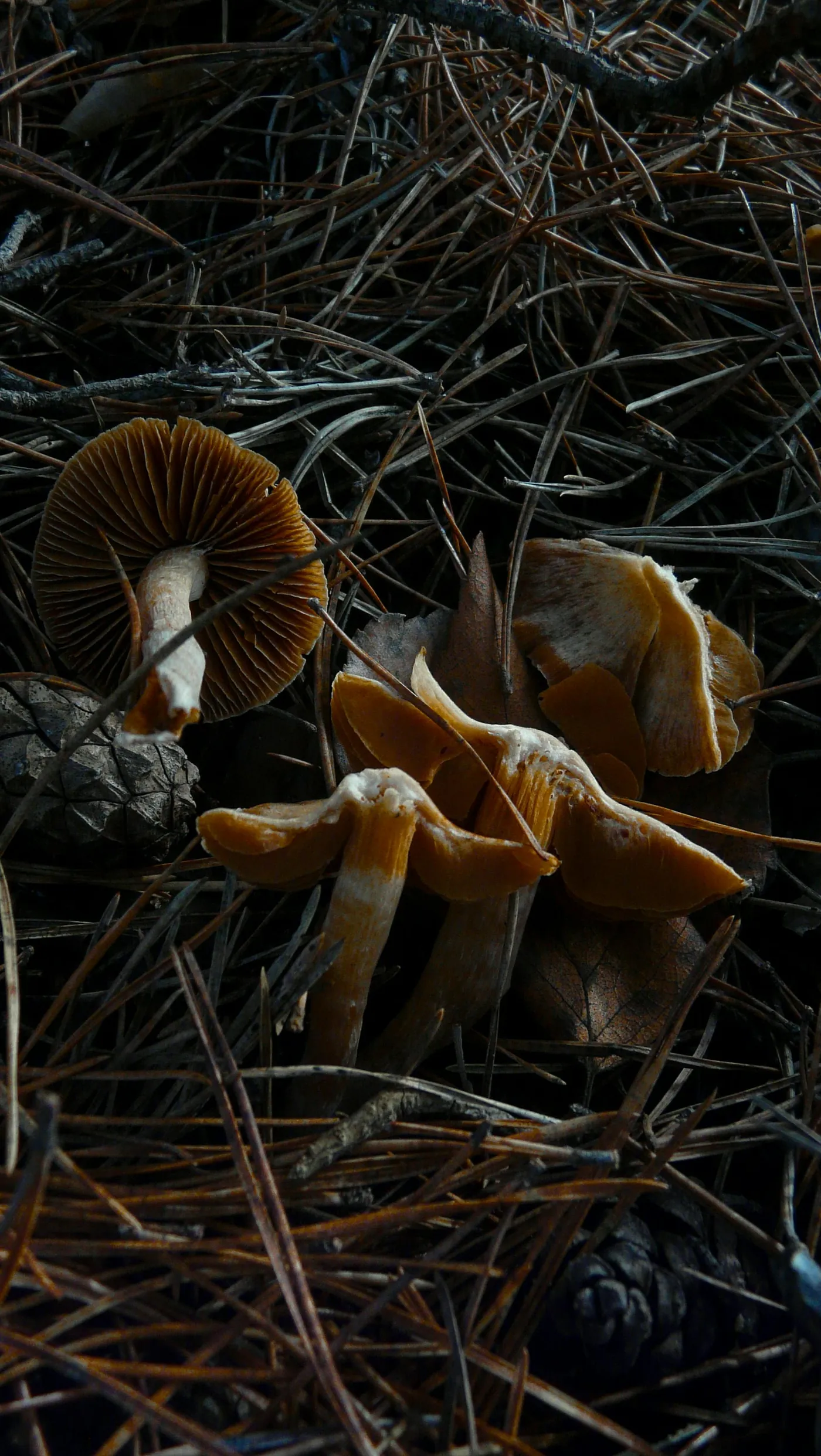
Why Fungi Bother Making Psilocybin at All.

The mushroom did not evolve to expand your consciousness. It evolved to mess with insects in a pile of dung. The real origin story of psilocybin is stranger than the trip.

Nature does not build complicated molecules for fun. Making psilocybin takes a fungus several enzymes and a real metabolic investment, the biochemical equivalent of a small factory. So the obvious question, the one that took scientists decades to seriously ask, is why. Why would a mushroom go to all that trouble to synthesize a compound that, as far as the mushroom is concerned, does nothing useful. The answer has nothing to do with us.

The compound is ancient and it is not ours

Psilocybin has been around for a very long time, on the order of tens of millions of years, which means it was doing its job for eons before a single human ever ate one. Whatever it evolved for, it evolved in a world with no people in it. That alone should deflate the spiritual reading a little. The molecule that dissolves your ego at a retreat was originally a tool for a fungus growing in rotten wood and animal droppings. It did not develop this power to teach you anything.

The genes travel in a pack

The real weirdness is in the genetics. The instructions for making psilocybin are bundled into a tight cluster of about five genes, sitting together in the genome. That packaging matters. Genes that live together in a cluster can be copied and moved as a single unit, which sets up one of the odder findings in fungal biology.
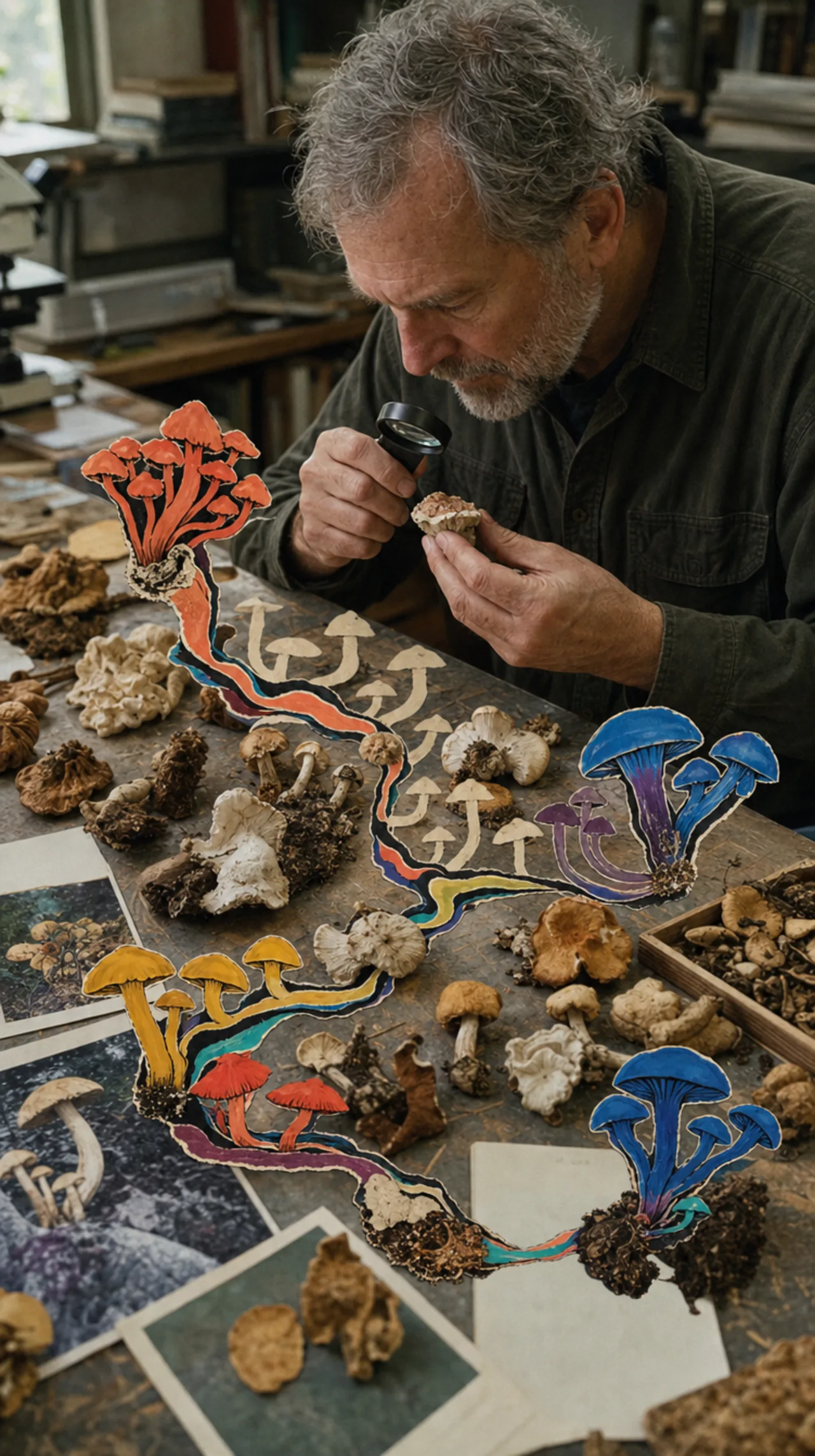
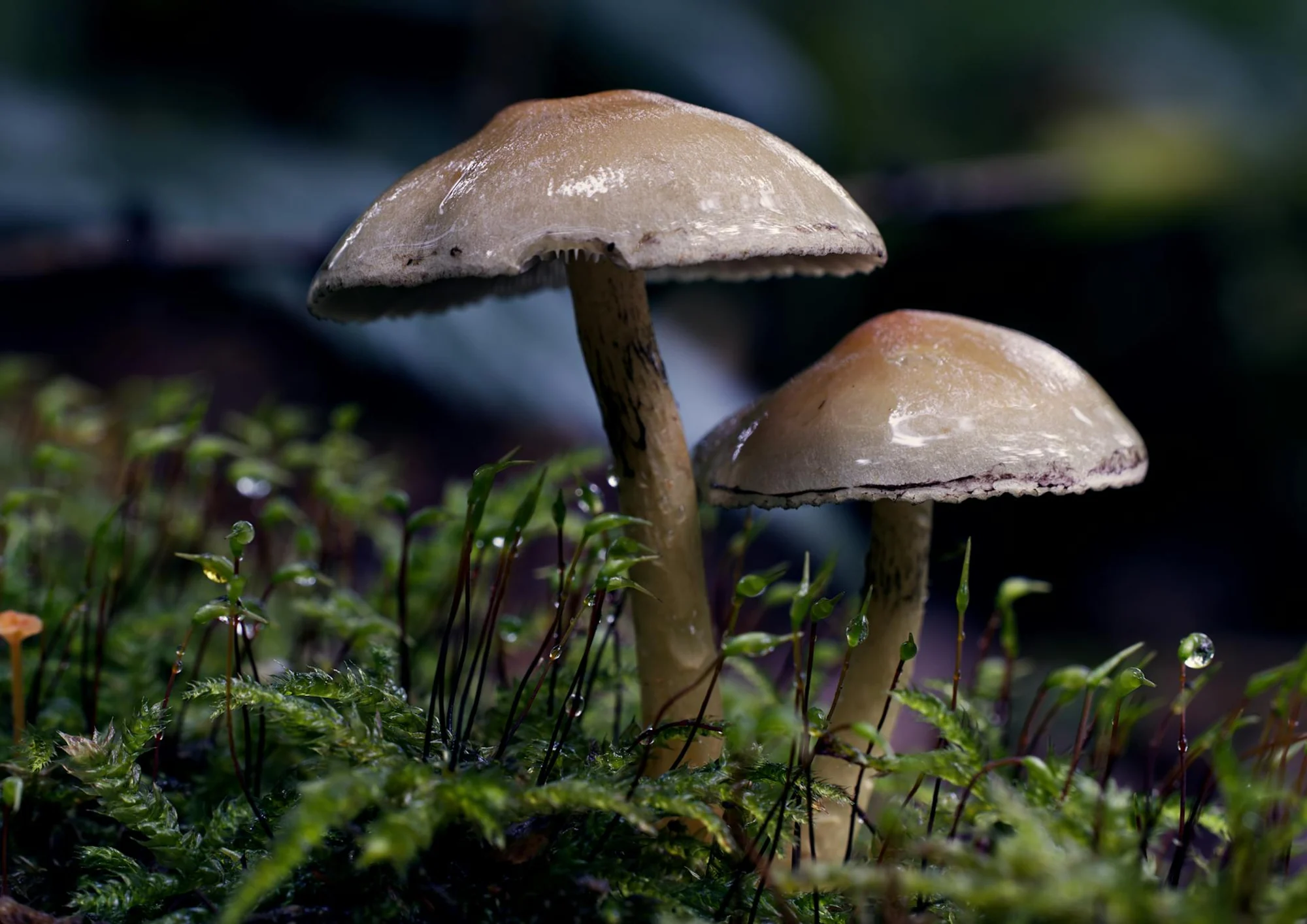
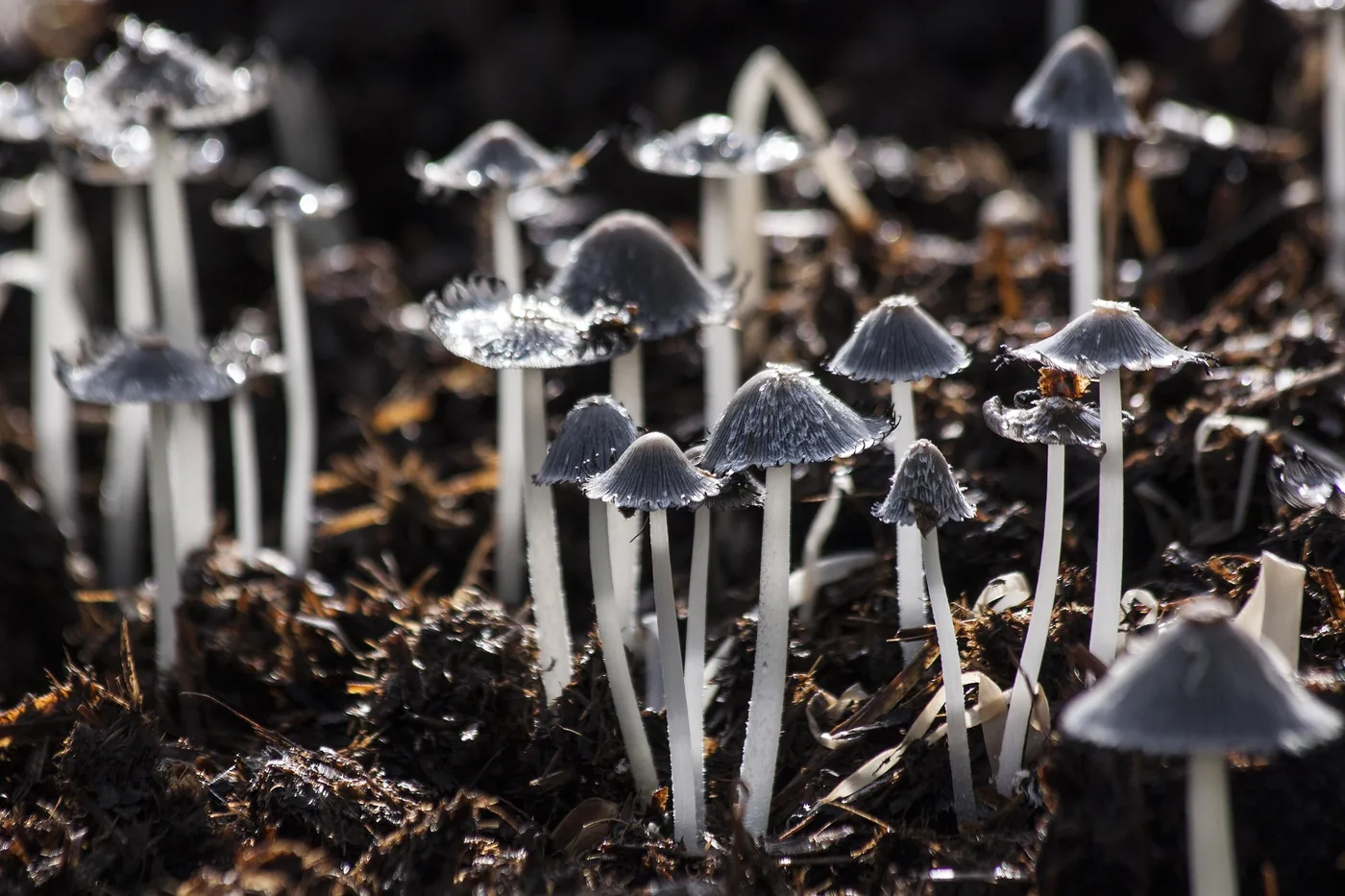
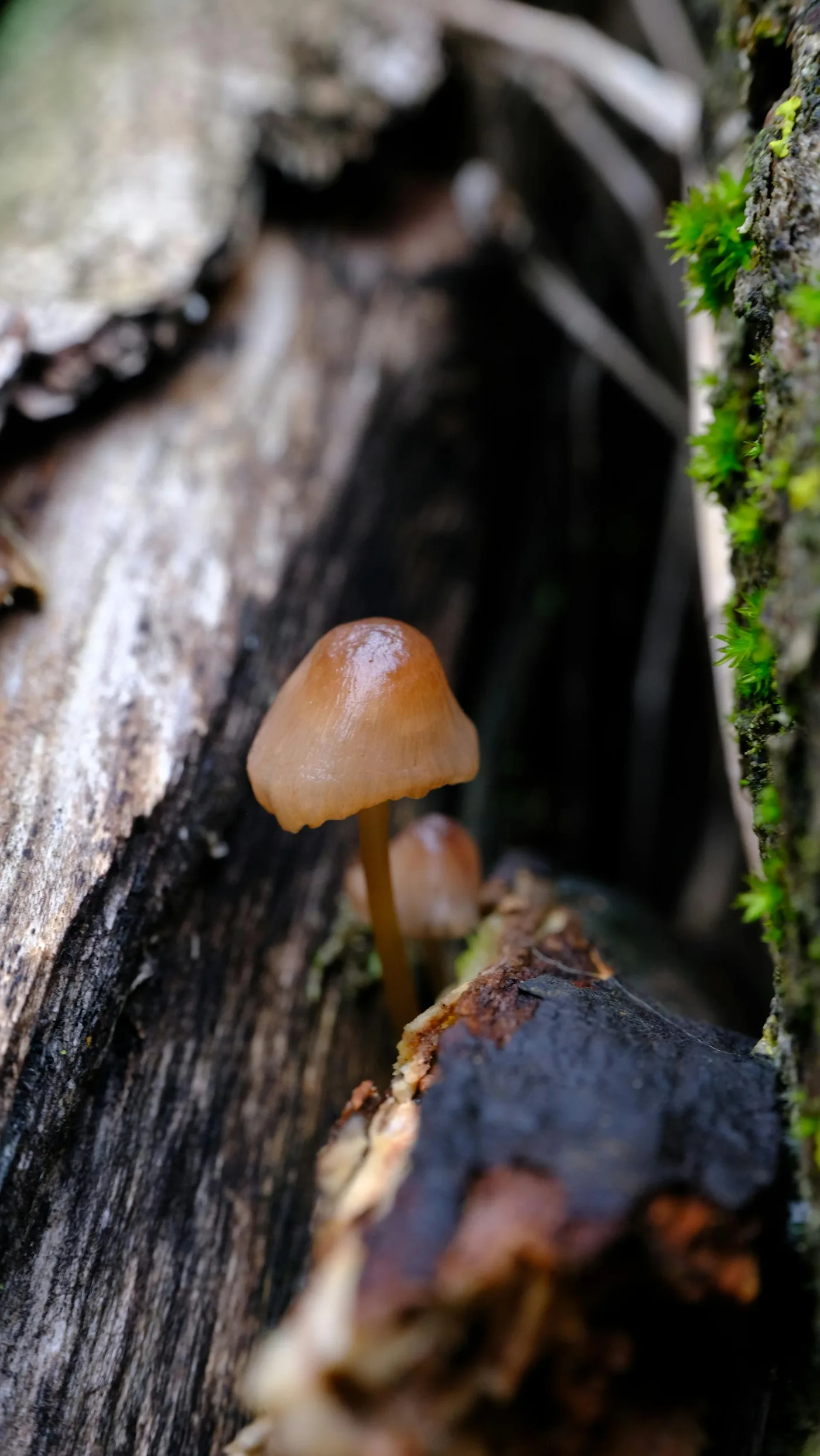
A cluster of small brown mushrooms growing on decaying wood in a damp forest
The molecule that dissolves your ego at a retreat was originally a tool for a fungus growing in rotten wood and dung.

Distant cousins, same recipe

Here is the puzzle that cracked it open. Psilocybin shows up in mushrooms that are not closely related to each other. It is scattered across the family tree in a way that normal inheritance cannot explain. If the trait had simply passed from parent to offspring, you would expect it to sit neatly in one branch. Instead it pops up in distant lineages with plain relatives in between that make no psilocybin at all. Something skipped the family line.
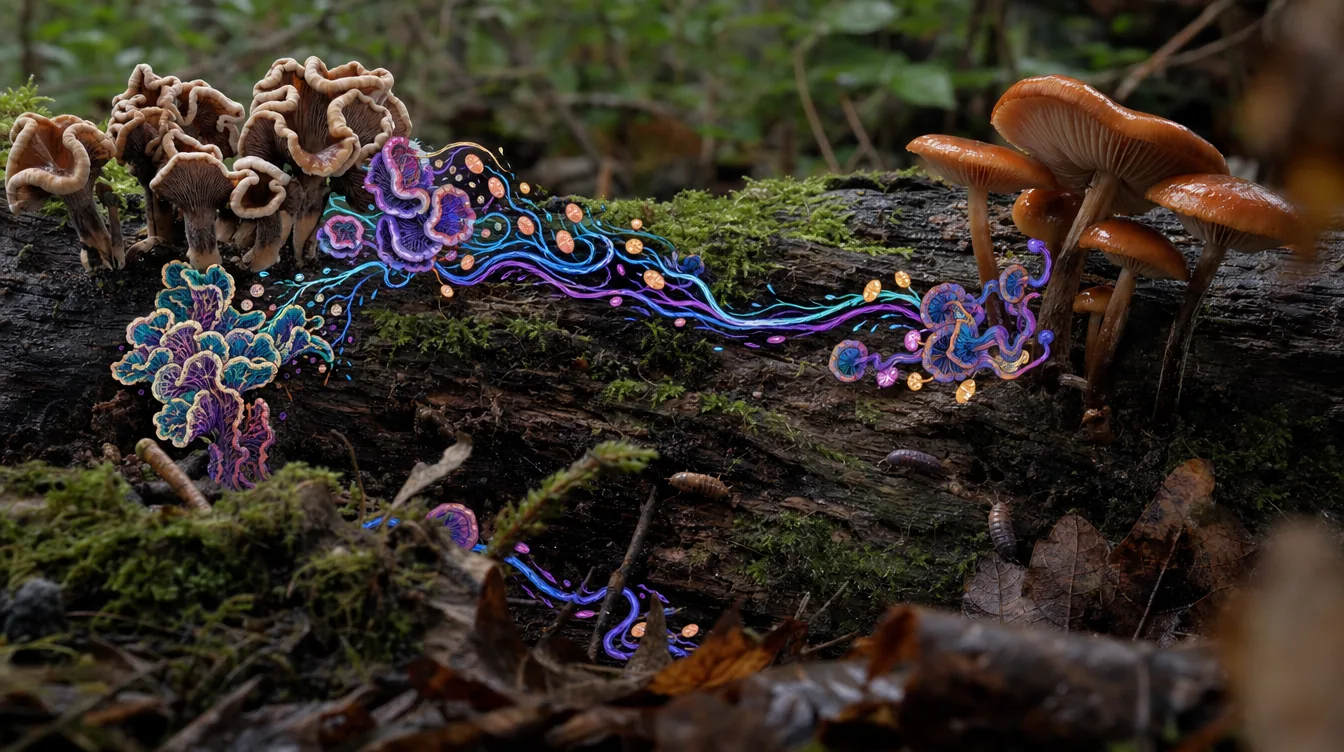
Several different mushroom species arranged side by side
Psilocybin is scattered across the fungal family tree, with plain relatives in between — normal inheritance cannot explain it.

The recipe got passed sideways

That something is horizontal gene transfer, and it is exactly what it sounds like. Instead of inheriting the psilocybin cluster from an ancestor, unrelated fungi appear to have swapped the genes sideways, passing the whole packet between species that happened to live in the same neighborhood. Bacteria do this constantly. It is how antibiotic resistance spreads. In mushrooms it is far rarer, which is what makes the psilocybin case so striking. A research team led by Jason Slot at Ohio State laid out the genomic evidence for it in 2018.

Follow the dung

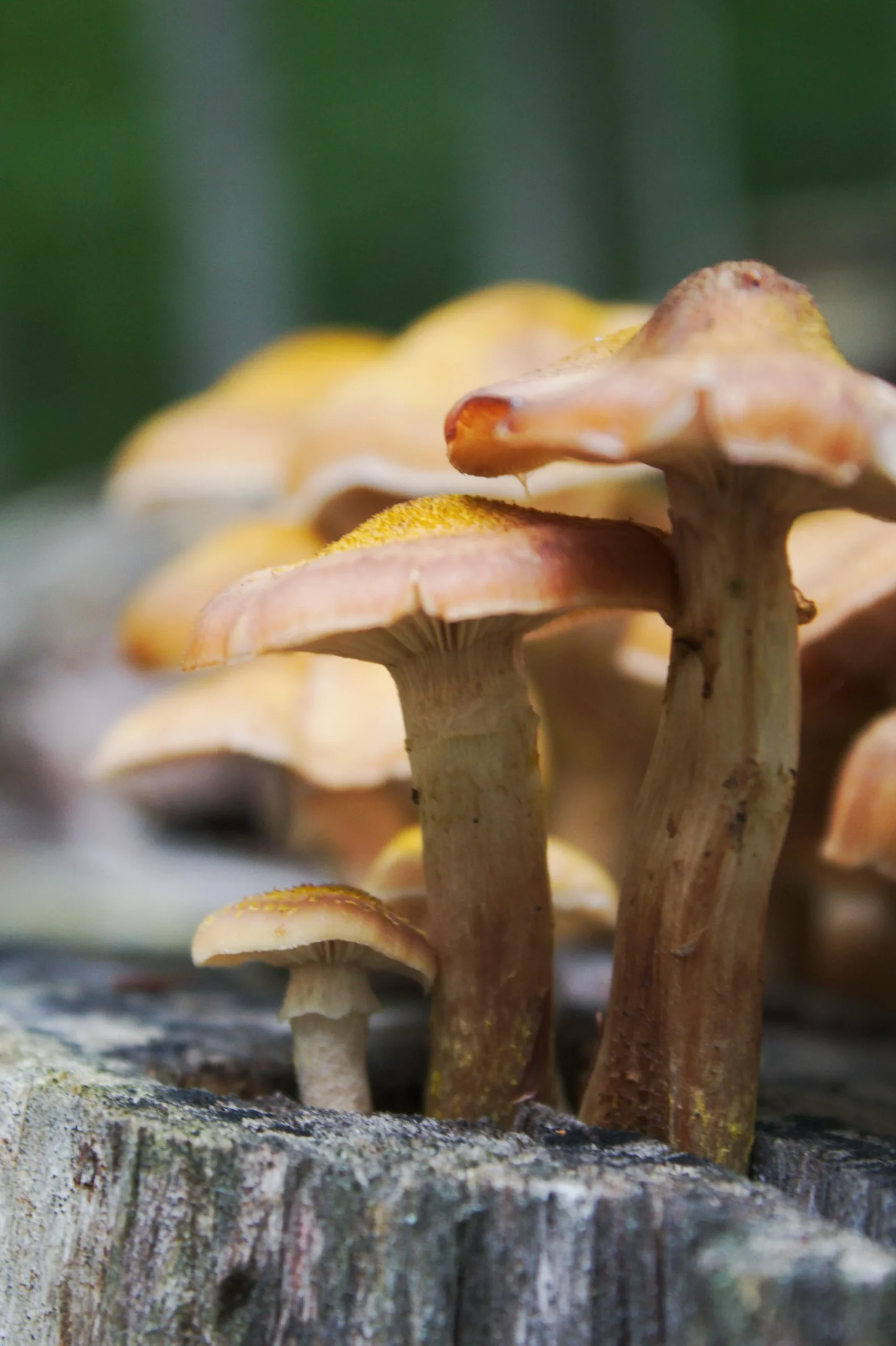
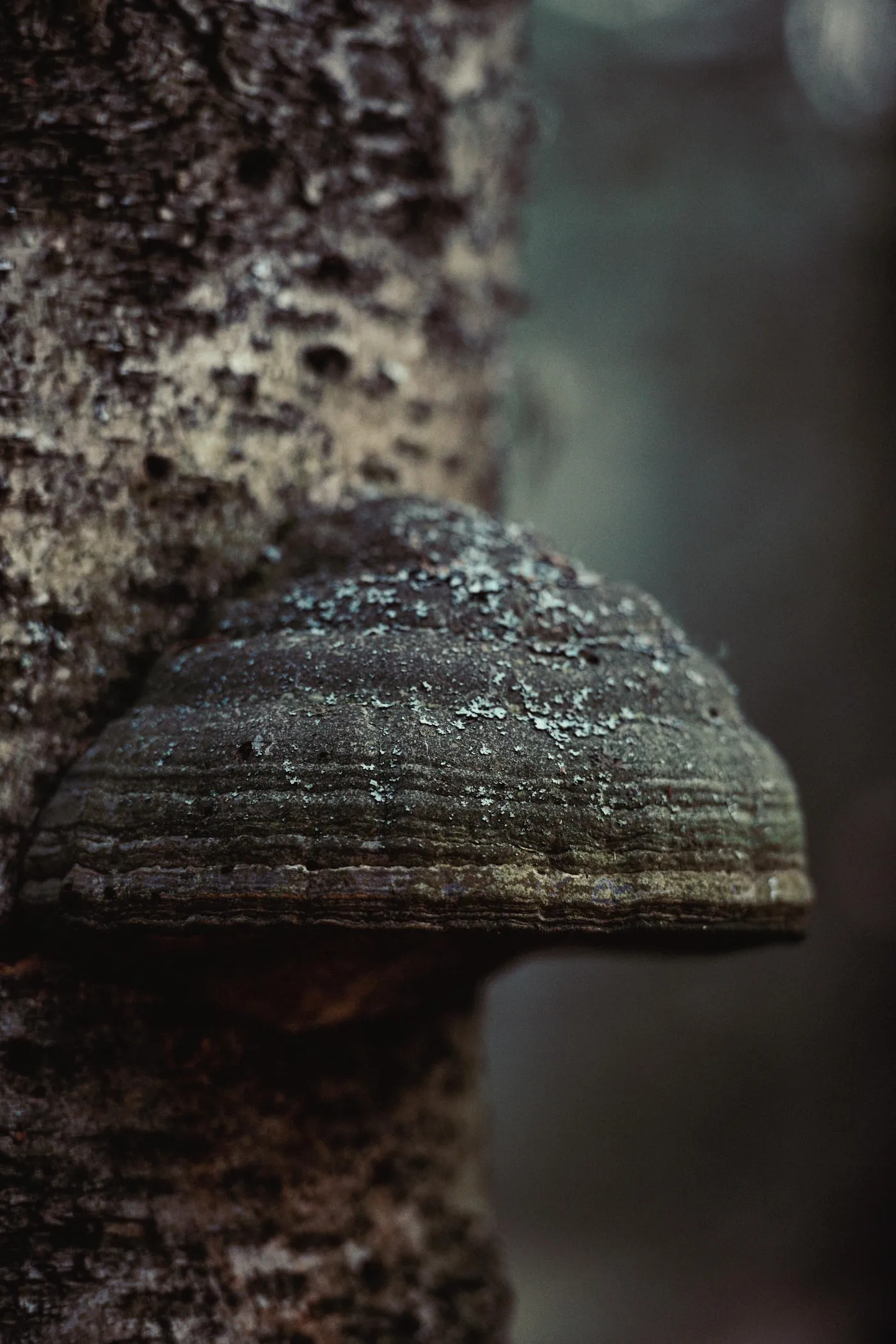
The next clue is where these fungi live. The psilocybin producers cluster in two grimy neighborhoods, animal dung and decaying wood. Both are crawling with insects. Both are places where a fungus is in constant competition with hungry invertebrates that would happily eat it or its food supply. That overlap is not a coincidence. The gene cluster seems to have moved between fungi that shared these insect-heavy niches, which points straight at what the compound might actually be for.
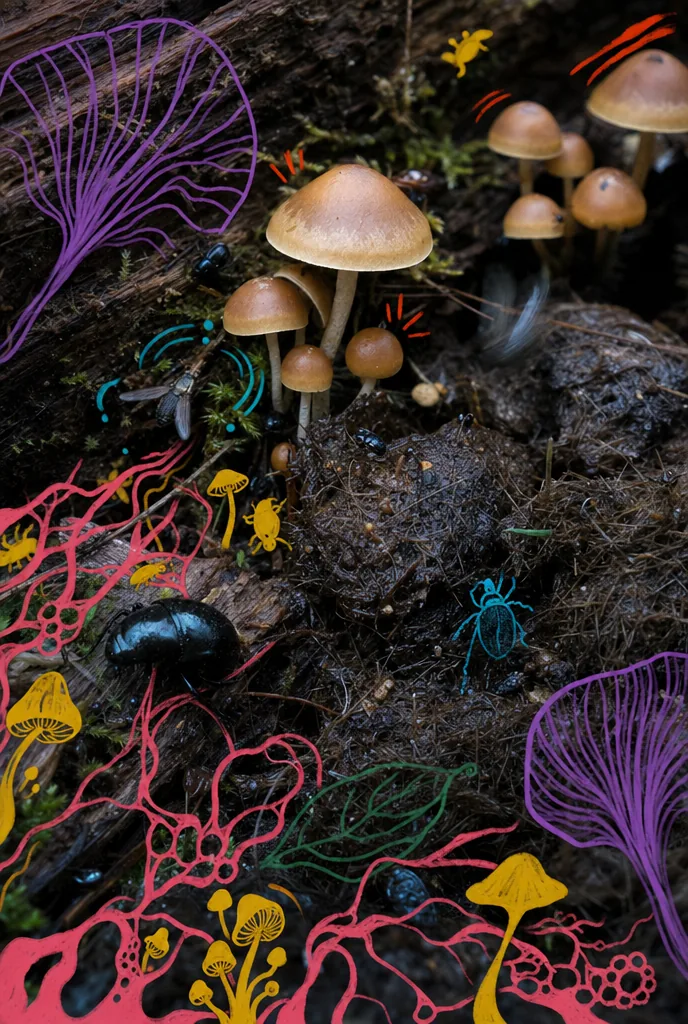
Mushrooms sprouting from decaying wood and animal dung on a forest floor
The producers cluster in two grimy, insect-heavy neighborhoods: animal dung and decaying wood. That overlap is not a coincidence.

It might be bug repellent for the mind

This is where it gets good. In humans, psilocybin scrambles perception. In insects, tinkering with the same neurotransmitter system does something more practical. It kills their appetite. The leading hypothesis is that psilocybin evolved as a chemical defense, a way to make a bug that nibbles the mushroom lose interest in nibbling. As Slot’s team put it, the fungus is not just poisoning its predators, it is altering their behavior to suit the fungus. Your transcendent afternoon is a side effect of an anti-snacking campaign aimed at beetles.
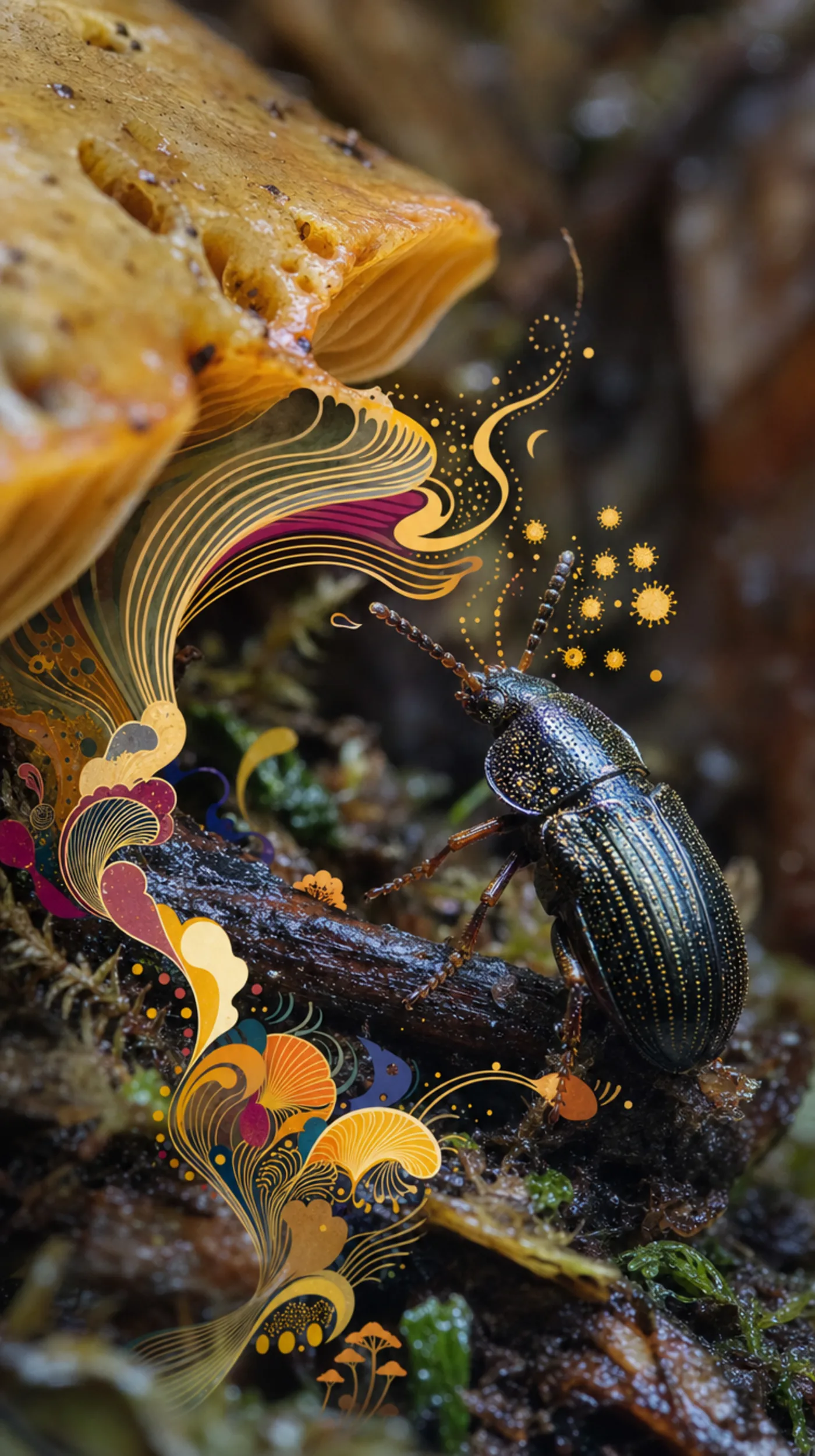
Mushrooms growing among forest debris and insects
The leading hypothesis: psilocybin evolved as a chemical defense to make hungry insects lose their appetite.

Why the theory holds up

It is still a hypothesis, and honest researchers flag it as one. But it explains the facts better than anything else on the table. It accounts for the scattered family tree, because a defense trait that helps in a specific habitat is exactly the kind of thing that would spread sideways between neighbors facing the same threat. It accounts for the dung-and-wood pattern. It accounts for why the trait persisted for millions of years, since a fungus that discourages its predators tends to survive to make more fungi. The trip is real. The intention behind it is not.

The part where it fits our brains anyway

Here is the accident that makes any of this possible for us. Psilocybin is built from tryptophan, the same amino acid your body uses to make serotonin. Once you swallow it, your system converts it to psilocin, and psilocin happens to slot into human serotonin receptors closely enough to switch them on. The fungus was aiming its chemistry at an insect nervous system. It hit ours by pure coincidence, because the underlying receptor machinery is ancient and shared across a huge range of animals. There was no target on your head. You are simply built from compatible parts, and the mushroom got lucky, or you did.
Mushrooms on the forest floor with soft light filtering through the trees
The fungus aimed its chemistry at an insect nervous system and hit ours by pure coincidence.

What this changes about how we talk

None of this makes psilocybin less interesting. If anything it makes it stranger, that a molecule shaped by insect warfare happens to fit human serotonin receptors well enough to rearrange a person’s sense of self. That is a genuine accident of chemistry, not a message from the fungus. Our primer on a standout Psilocybe strain and our explainer on how the compound acts in the brain cover the rest without the mysticism markup. The mushroom was never trying to reach you. It was trying to get a beetle to put down the fork.

Frequently Asked Questions

Why do mushrooms make psilocybin in the first place? The leading hypothesis is chemical defense. The compound suppresses appetite in insects, which likely protected the fungi in insect-heavy habitats like animal dung and rotting wood.

How old is psilocybin? Estimates place it at tens of millions of years, long before humans existed. Whatever it evolved for, it did not evolve for us.

What is horizontal gene transfer? It is the movement of genes between organisms outside of normal reproduction. The psilocybin gene cluster appears to have passed sideways between unrelated fungi that shared the same habitat.

If it evolved for insects, why does it affect the human brain? Coincidence. Psilocybin is built from tryptophan and converts to psilocin, which fits human serotonin receptors because that receptor machinery is ancient and shared across many animals.

Are all psilocybin mushrooms closely related? No. They are scattered across the fungal family tree, with plain, non-psychedelic relatives in between. That odd pattern is exactly what tipped scientists off to the sideways gene transfer.

Ready to apply what you’ve learned?

Browse lab-tested magic mushrooms, edibles, microdose capsules and teas — shipped discreetly across the United States.
Shop Magic Mushrooms

The Banker Who Blew Maria Sabina’s Cover.

A J.P. Morgan vice president ate mushrooms in a Mexican village in 1955, wrote it up for a magazine, and accidentally kicked off the psychedelic era. It did not end well for the woman who let him in.

In 1955, a vice president at J.P. Morgan traveled to a remote town in the mountains of Oaxaca, sat in a dark room with a Mazatec healer, and ate a pile of mushrooms. Two years later he told the whole world about it in a glossy American magazine. Almost everything that followed, the counterculture, the crackdown, the modern therapy trials, traces back to that one man’s need to share.

The unlikely tourist

His name was R. Gordon Wasson, and he was not a hippie or a scientist. He was a Wall Street banker with an unusual hobby. His Russian wife had grown up loving wild mushrooms, he had grown up fearing them, and their argument about fungi turned into a decades-long obsession that took them around the world. That obsession eventually pointed them at Mexico, where rumors said indigenous people still used mushrooms in sacred rituals that had survived centuries of suppression.

Getting in the door

The rituals had good reason to stay hidden. After the Spanish conquest, mushroom ceremonies went underground to escape the Inquisition, surfacing only in scattered records for four hundred years. Wasson found his way to Huautla de Jimenez and to Maria Sabina, a Mazatec curandera who agreed, for reasons that are still debated, to let him take part. He later claimed he and his companion were the first outsiders in recorded history to eat the mushrooms in the ceremony. Whether that boast was even true is beside the point of what he did with it.

A vintage magazine spread lying open on a wooden table under warm lamplight
In May 1957, a ten-page LIFE spread dropped a hidden ceremony into millions of American living rooms.

The article that changed everything

In May 1957, LIFE magazine ran Wasson’s first-person account under the title “Seeking the Magic Mushroom.” It was a ten-page spread with photographs of the ceremony, dropped into one of the most-read family magazines in America, tucked between ads for cigarettes and shaving cream. Millions of people read it. The response was instant and enormous. A subject that had been invisible to the West the week before was suddenly a national curiosity.

The name was not his idea

That famous phrase, “magic mushroom,” came from a LIFE editor, added over Wasson’s objections because it read better on the page. Wasson, for all his flaws, understood he was handling something serious. The editor understood he was selling magazines. The catchier version won, and the whole culture inherited a fairy-tale label for a Schedule I drug.

A vintage magazine headline in bold mid-century type
The catchier version won. The whole culture inherited a fairy-tale label for a Schedule I drug.

Hofmann finishes the job

The science moved fast once the door was open. Within about a year, the Swiss chemist Albert Hofmann, the same man who had first synthesized LSD, got hold of samples from the Mexican mushrooms, isolated the active compound, and named it psilocybin. His employer, Sandoz, briefly sold it as a pharmaceutical. For a short window around the early 1960s, a doctor could legally hand a patient the very molecule a Mazatec healer had shared on a dirt floor in Oaxaca. That window did not stay open long once the counterculture caught the scent.

The Cold War subplot

There is a stranger layer under all this. Part of Wasson’s expedition was funded, through a front organization, by money that traced back to the CIA. The agency was deep into its research on mind-altering drugs at the time, and Wasson credited the front at the end of his own article without seeming to grasp the full picture. Some historians read the whole LIFE feature through the lens of Cold War America, a story of a brave Western man unlocking a hidden native secret, published by a magazine whose owner believed American culture should remake the world.

A dim, atmospheric interior evoking a 1950s ceremony by candlelight
Part of the expedition traced back to CIA money — some historians read the whole feature as Cold War theater.

What it did to Huautla

For Wasson, the article was a triumph. For Maria Sabina, it was the beginning of the end. He had promised discretion, even giving her a false name in print, but he eventually let the real location slip. Seekers came by the hundreds. Hippies, curiosity-tourists, and a few rock stars descended on a small mountain town looking for a mushroom experience. The sacred ceremony became a spectacle. Sabina’s own community turned on her, blaming her for opening the door, and she reportedly said the mushrooms lost their power once outsiders came chasing them for the wrong reasons.

The backlash was swift

The tourism helped trigger the crackdown. As mushrooms and LSD spread into the counterculture, the political mood curdled. In 1970, the United States passed the Controlled Substances Act and filed psilocybin as Schedule I, the most restrictive category, alongside a formal declaration that it had no medical use. The research froze for a generation. The same molecule that scientists now study for depression spent fifty years legally frozen, partly because a banker could not keep a secret.

A weathered small-town street scene in the mountains of Oaxaca
The research froze for a generation — fifty years legally frozen, partly because a banker could not keep a secret.

The uncomfortable inheritance

Every part of the current psychedelic moment sits on top of this story. The renewed science, the wellness marketing, the retreats that borrow indigenous language for a Western audience, all of it descends from a 1957 magazine article and the woman who paid for it. The field talks a lot now about respecting its roots. Those roots include a broken promise and a ruined life. Our look at how mushrooms got their modern rebrand and our breakdown of the research renaissance sit with that discomfort instead of skipping past it. Wasson lived a long life and defended his choices to the end, calling the exposure a fair price for science. Maria Sabina died poor in the town she never left. History books credit him with the discovery.

Frequently Asked Questions

Who was R. Gordon Wasson? A J.P. Morgan banker and amateur mycologist who took part in a Mazatec mushroom ceremony in 1955 and published his account in LIFE magazine in 1957, introducing psilocybin to the Western public.

Who was Maria Sabina? A Mazatec curandera from Huautla de Jimenez in Oaxaca, Mexico, who led the ceremony Wasson attended. His article exposed her and her town to a flood of outsiders, with lasting harm to her life and standing.

Did the CIA really fund the expedition? In part, through a front organization tied to the agency’s research on mind-altering drugs. Wasson credited the front at the end of his article, apparently without grasping the full connection.

When was psilocybin banned in the United States? In 1970, under the Controlled Substances Act, which classified it as Schedule I and effectively froze scientific research for decades.

Who first isolated psilocybin? The Swiss chemist Albert Hofmann, who had earlier synthesized LSD, isolated and named the compound in the late 1950s from samples of the Mexican mushrooms.

Ready to apply what you’ve learned?

Browse lab-tested magic mushrooms, edibles, microdose capsules and teas — shipped discreetly across the United States.
Shop Magic Mushrooms

The Stamets Stack Explained: Psilocybin, Lion’s Mane, and Niacin.

A clear breakdown of the popular Stamets Stack microdosing protocol — the reasoning behind each ingredient, the suggested schedule, and what the evidence actually says.

Of all the microdosing protocols that have circulated over the last decade, none is more widely discussed than the one proposed by the mycologist Paul Stamets. Known to a broad audience for his research on fungi and their role in ecosystems and human health, Stamets suggested a simple three-part formula that combines a sub-perceptual dose of psilocybin with two supporting ingredients. It has since become the reference point for anyone curious about stacking psilocybin with other compounds.

The appeal is easy to understand. The Stamets Stack promises the everyday benefits people associate with microdosing — steadier mood, sharper focus, more creativity — while adding a specific, mechanistic story about long-term brain health. But the protocol is also frequently oversold and misunderstood. This guide breaks down what the stack actually is, the reasoning behind each ingredient, how the schedule works, and, crucially, what the evidence does and doesn’t support.

What’s Actually in the Stack

The Stamets Stack has three components, each chosen for a specific reason:

  • Psilocybin — a sub-perceptual microdose, typically in the range of 0.1–0.3 g of dried magic mushrooms. This is far below the threshold that produces a noticeable trip.
  • Lion’s Mane (Hericium erinaceus) — a non-psychoactive culinary and medicinal mushroom prized for its potential effects on nerve health.
  • Niacin (vitamin B3) — usually 100–200 mg of the flushing form, included for a reason that surprises most newcomers.

On paper it looks like an ordinary supplement stack. The interesting part is the theory behind how these three ingredients are meant to work together — a theory built around the idea of neurogenesis, the growth of new neural connections.

It’s worth understanding why this particular combination captured so much attention. Stamets is not a fringe figure; he is a serious, widely respected mycologist whose work on fungi has reached a large public audience. When someone with that credibility proposed a specific, mechanistic protocol — rather than the vague “just take a little” advice common in microdosing circles — people listened. The stack offered something the microdosing conversation had been missing: a concrete recipe, a clear schedule, and a plausible biological story for why it might work. That structure is a large part of its enduring popularity.

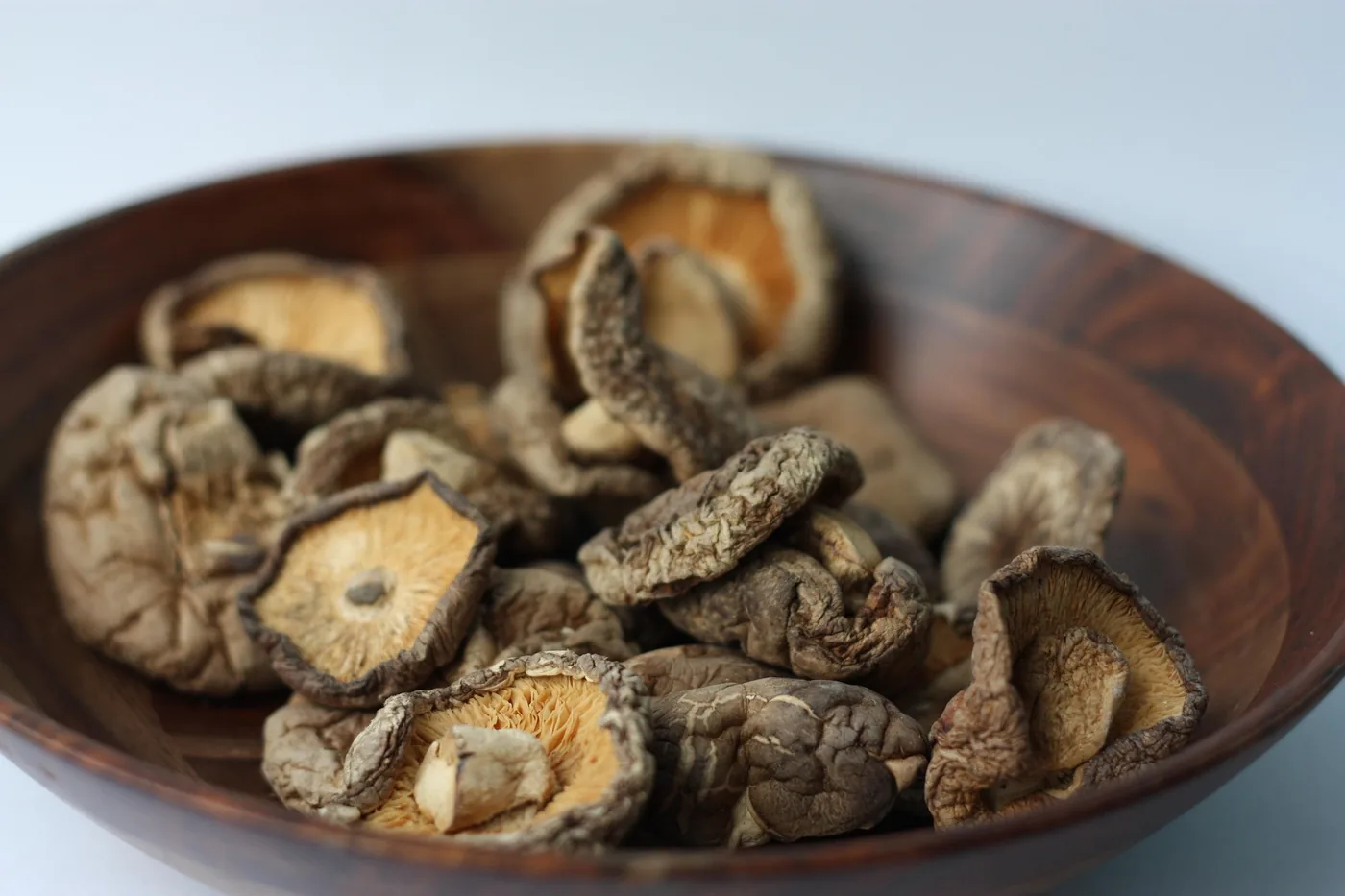
Dried medicinal mushrooms arranged in a wooden bowl
Lion’s Mane is the non-psychoactive partner in the stack, included for its effect on nerve growth factor.

The Reasoning Behind Each Ingredient

Start with psilocybin. Beyond its acute effects, research suggests psilocybin can promote neuroplasticity — the brain’s capacity to form and reorganize connections. Even at sub-perceptual doses, proponents argue, it may gently encourage this flexibility, creating a window in which new patterns of thought and behavior are easier to establish.

Lion’s Mane is the supporting act. It contains two families of compounds — hericenones and erinacines — that, in laboratory and animal studies, appear to stimulate the production of nerve growth factor (NGF), a protein essential for the growth, maintenance, and survival of neurons. The logic of the stack is that if psilocybin opens a window for new connections, Lion’s Mane helps supply the raw material to build and protect them.

Then comes the ingredient that puzzles people: niacin. Why add a B vitamin famous for making your skin flush and tingle? Stamets’s stated reasoning is twofold. First, niacin is a vasodilator that helps distribute the other compounds throughout the body, including to the peripheral nervous system. Second — and more practically — the flush acts as a deterrent against abuse. Because a larger-than-intended dose produces an uncomfortable flush, niacin discourages anyone from escalating the psilocybin in search of a stronger effect.

The Schedule: How to Cycle It

A protocol is only as good as its schedule, and the Stamets Stack is built around deliberate cycling to avoid tolerance. The classic pattern is straightforward:

  • Four days on, three days off. Take the stack for four consecutive days, then pause for three. This weekly rhythm gives the brain’s serotonin receptors time to reset and keeps the microdose from losing its effect.
  • Run for about one month, then take a longer break of two to four weeks before starting another cycle.
  • Dose in the morning, with or shortly after breakfast, so the subtle effects align with your waking hours and don’t interfere with sleep.

The three-days-off portion is not an afterthought. Psychedelics build tolerance quickly, and without regular breaks a daily microdose would fade into nothing within a week. The gaps are what keep the protocol working over time.

What People Report — and What the Evidence Says

Anecdotally, people who follow the Stamets Stack describe a familiar cluster of benefits: a calmer baseline mood, improved focus and flow at work, more creative problem-solving, and a gradual quieting of repetitive negative thoughts. Some report that fatigue lifts and that they recover from stressful days more easily. The experience is meant to be subtle — a gentle background shift, not a dramatic high.

Here honesty matters. The mechanistic story — psilocybin for plasticity, Lion’s Mane for NGF, niacin for delivery — is biologically plausible and grounded in real preclinical findings. But rigorous human trials specifically testing the combined stack are still limited. Much of what we know about microdosing comes from self-report surveys, which are vulnerable to expectation and placebo effects. Naturalistic studies of large groups of microdosers have found self-reported improvements in mood and mental health, but well-controlled trials have been more mixed, sometimes showing that expectation accounts for a large part of the benefit.

None of this means the stack is worthless. It means the honest position is one of cautious optimism: a promising, low-dose protocol with a coherent rationale and encouraging anecdotal support, still waiting on the rigorous science that would confirm exactly how much of the effect is pharmacological.

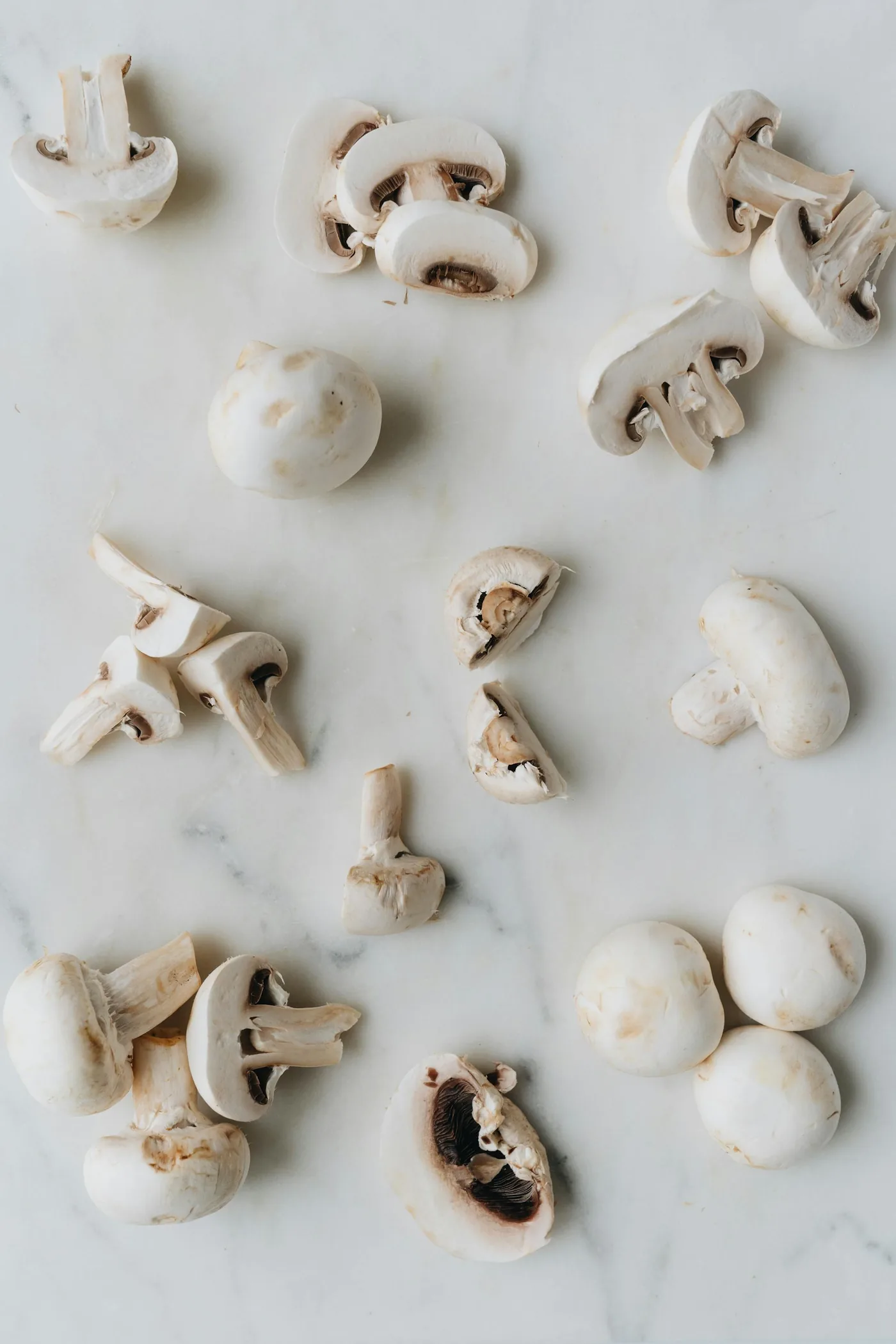
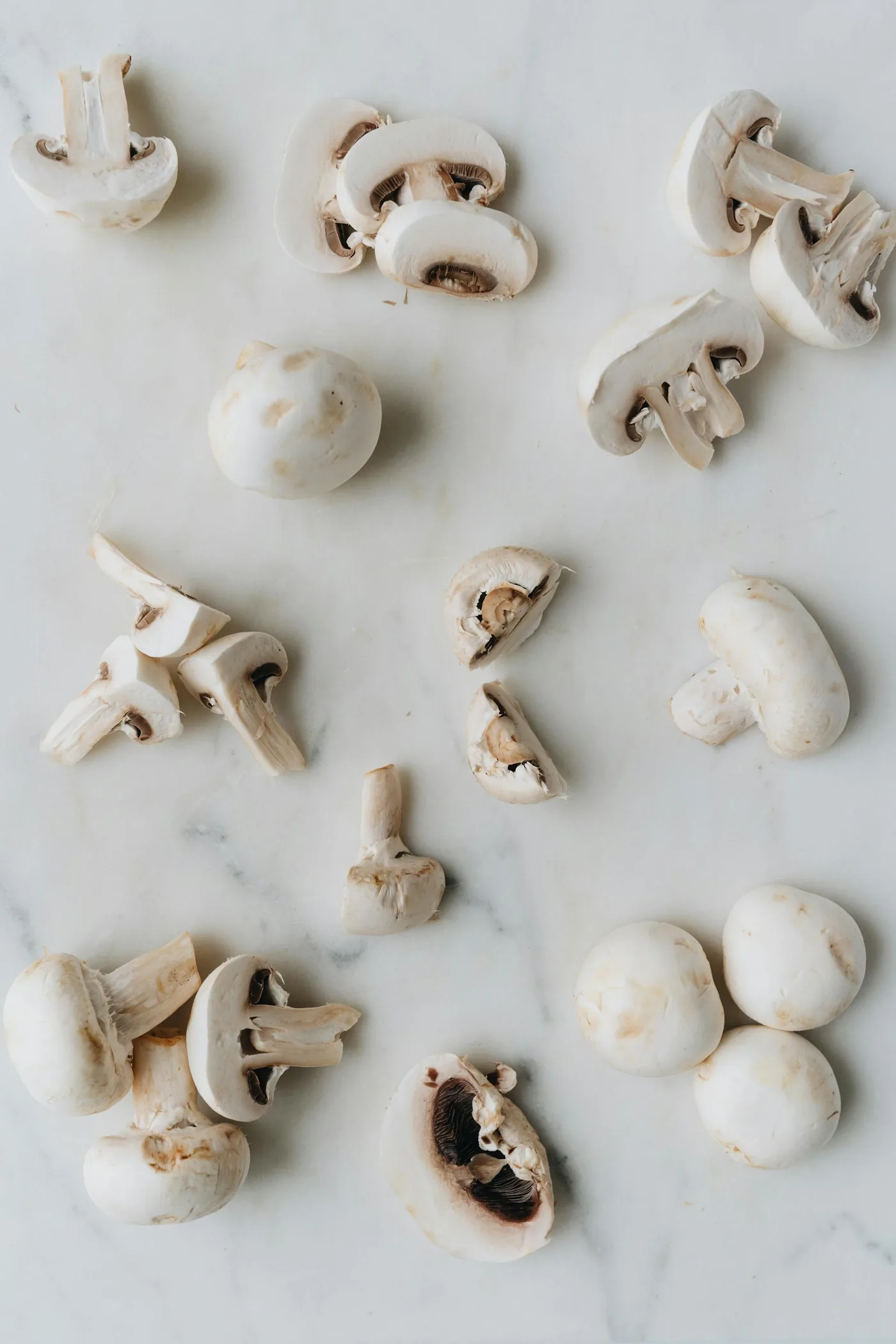
Sliced mushrooms laid out on a pale marble surface
Consistency and careful measurement matter more than dose size when you’re tracking a subtle effect.

How to Approach It Responsibly

If you decide to try the stack, treat it like an experiment on yourself, not a magic bullet. A few principles keep it safe and meaningful:

  • Start low. Begin at the bottom of the dose range and only adjust after a full cycle. The goal is a sub-perceptual dose — if you feel a trip coming on, you’ve taken too much.
  • Keep a baseline. On dosing days, don’t change anything else about your routine. You can’t measure the signal of a microdose if you also start a new diet, sleep schedule, or exercise plan the same week.
  • Journal three metrics daily — mood, focus, and creativity, each on a simple 1–10 scale. After a month, look at the trend, not any single day.
  • Mind interactions and health conditions. Anyone taking psychiatric medication (especially SSRIs), with a personal or family history of psychosis, or who is pregnant should not microdose without medical guidance.

For consistency, many people prefer a pre-measured, lab-tested capsule so that every dose is identical — our Clarity Microdose capsules combine the three components in a fixed ratio and are packed to preserve potency. Whatever source you use, the discipline is the same: consistent dose, honest tracking, and a genuine break between cycles.

Who Should Think Twice

The stack is not universally appropriate, and a responsible guide has to say so plainly. Because psilocybin is the active ingredient, the same cautions that apply to all microdosing apply here. Anyone with a personal or family history of psychosis or schizophrenia should avoid it entirely, as psychedelics can trigger or worsen these conditions. People taking psychiatric medication — especially SSRIs, MAOIs, or lithium — should consult a knowledgeable clinician first, since interactions are possible and can blunt or complicate the effects.

There are also considerations specific to the other ingredients. High doses of niacin can cause an intense flush and, rarely, affect the liver, so it should be kept within the recommended range. Anyone who is pregnant or breastfeeding should not use the stack. And legality is its own real consideration: psilocybin remains illegal in most places, and readers are responsible for understanding the laws where they live. None of this is meant to alarm — it’s meant to ensure that anyone who explores the stack does so with full awareness rather than blind enthusiasm.

The Bottom Line

The Stamets Stack endures because it tells a satisfying story and offers a simple, structured way to explore microdosing. Its logic — pairing psilocybin’s plasticity with Lion’s Mane’s nerve support and niacin’s delivery — is elegant and rooted in real science, even if the combined protocol still awaits definitive clinical proof. Approached patiently, tracked honestly, and cycled with proper breaks, it is one of the more thoughtful entry points into the world of microdosing. Just remember that the stack is a tool for steady, incremental change, not a shortcut — and that the most important variable is always how carefully you use it.

Ready to apply what you’ve learned?

Browse lab-tested magic mushrooms, edibles, microdose capsules and teas — shipped discreetly across the United States.

Shop Magic Mushrooms

Shrooms Got a Rebrand. Acid Never Did.

Somewhere along the way, magic mushrooms became a wellness product with good branding, while LSD stayed stuck in 1969. Same schedule, same felony, wildly different reputations.

Walk into any conversation about psychedelics in 2026 and you will notice something strange. Mushrooms get talked about like a green juice. LSD gets talked about like a warning label. Both are Schedule I. Both will get you the same charge in most of the country. One of them just hired a better publicist.

Under federal law, psilocybin and LSD sit on the same shelf, filed as having no accepted medical use and a high potential for abuse. That is the legal reality. The cultural reality split a long time ago. Say “acid” and people picture a bad night at a music festival in 1969. Say “mushrooms” and the same people picture a cold-pressed juice and a weighted blanket. Nothing about the pharmacology earned that difference. Marketing did.

The word “natural” did a lot of heavy lifting

The rebrand runs on a single adjective. Mushrooms grow in the ground, which lets people file them under wellness, next to adaptogens and mushroom coffee, most of which contains no psilocybin at all. LSD was cooked up in a Swiss lab in 1938, which files it under chemistry, next to things your mother told you to avoid. This is mostly vibes. Your brain does not care whether a molecule came from a fungus or a flask. But “found in nature” sells, and “synthesized by a chemist” does not, and the whole wellness economy is built on that gap.

A soft-focus flat lay of dried mushrooms arranged like a minimalist wellness product
Your brain does not care whether a molecule came from a fungus or a flask. But “found in nature” sells.

Even the name was a marketing decision

The phrase “magic mushroom” was not coined by a shaman or a scientist. A LIFE magazine editor slapped it on a 1957 article, over the author’s objections, because it was catchy. It worked. Seventy years later, that editor’s headline instinct is still shaping how a Schedule I drug gets received at dinner parties. The mushroom got a fairy-tale adjective. The acid got a rap sheet.

Silicon Valley finished the job

Then the tech world adopted microdosing, and the transformation was complete. The story became productivity, not rebellion. Founders swapped tips about sub-perceptual doses the way they swapped tips about standing desks. Suddenly the drug wasn’t about dropping out, it was about optimizing your quarterly output. Whether any of this actually works is a separate and much shakier question, but the framing landed. A drug that promises focus reads very differently than a drug that promises to melt your ego, even when it is the same drug doing both.

A tidy desk with a laptop, coffee, and a small container of capsules
Silicon Valley reframed the drug as productivity, not rebellion — the same molecule, a very different pitch.

The wellness economy needed a hero molecule

It also arrived at the perfect moment. The 2010s built an entire industry on the word “natural,” selling adaptogens, nootropics, and mushroom powders to people who wanted an edge without the stigma of a drug. Psilocybin slotted right in. It had the fungal pedigree, the earthy aesthetic, and a story about healing rather than partying. The fact that most of the mushroom products on a store shelf contain no psilocybin at all barely registered. The category had already trained shoppers to trust anything with a mushroom on the label, which is a marketing dream and a fact-checker’s nightmare.

The map makes no sense, and that helps

The legal patchwork adds to the confusion in a way that quietly benefits the mushroom. Oregon legalized supervised psilocybin services in 2020. Colorado decriminalized possession and set up healing centers in 2022. Denver, Oakland, and Washington DC went the deprioritization route. Cross a state line and the same handful of dried caps flips from a regulated therapy to a felony. The two states even structured their laws differently, which keeps everyone politely confused. All that reform energy went to mushrooms first. LSD is barely in the conversation.

Dried mushroom caps arranged on a neutral surface
Cross a state line and the same handful of dried caps flips from a regulated therapy to a felony.

The evangelists are very good at this

It helps that mushrooms have Paul Stamets. The mycologist has spent decades pitching fungi as a fix for nearly everything, and at a big psychedelics conference in 2025 he told a cheering crowd that psilocybin should be free for every person on the planet. That is a movement with a folk hero, a TED aesthetic, and a merch table. LSD has no equivalent. Its most famous spokesman was Timothy Leary, and his brand aged like milk.

The pushback nobody wants to hear

Not everyone is thrilled with the glow-up. Michael Pollan, who did more than anyone to make this respectable, has called parts of the movement premature, a rush to legalize before the researchers finish their work. He has a point. A rebrand is not a safety profile. The same voter survey that found most Americans now support regulated access also found them far more nervous about decriminalizing personal use. The public likes the wellness version. It is less sure about the version with no supervision attached.

A minimalist wellness-style product shot of mushrooms in soft light
The public likes the polished wellness version. It is far less sure about the one with no supervision attached.

What the rebrand leaves out

The clean wellness framing skips the part where these are strong drugs that can hand you the worst night of your life. It skips the contraindications. It skips the fact that “natural” and “safe” are not synonyms, a point our guide to set and setting keeps having to make. A well-designed label is not the same thing as a well-understood substance. LSD is still waiting for its wellness moment. Same schedule, same risks, same century of baggage. It just never found an editor willing to call it magic.

Frequently Asked Questions

Are mushrooms actually safer than LSD? Their reputations differ far more than their risk profiles do. Both are Schedule I, both are strong psychedelics, and “natural” is not a safety rating. The gap between them is cultural, not pharmacological.

Who came up with the term “magic mushroom”? A LIFE magazine editor added it to a 1957 article because it read well, over the author’s objections. The name outlived everyone involved.

Does microdosing really boost focus and creativity? The evidence is thin and mixed. Several controlled studies have struggled to separate real effects from placebo. The productivity pitch is more marketing than settled science.

Where is psilocybin legal in the United States? Oregon and Colorado run regulated, supervised programs, and several cities have decriminalized personal possession. Everywhere else it stays illegal, and federal law still lists it as Schedule I.

Do mushroom coffee and adaptogen products contain psilocybin? Almost never. Most functional-mushroom products use species like lion’s mane or reishi and contain no psychedelic compound at all.

Ready to apply what you’ve learned?

Browse lab-tested magic mushrooms, edibles, microdose capsules and teas — shipped discreetly across the United States.
Shop Magic Mushrooms

What “Set and Setting” Actually Means, and Why the Phrase Won’t Die.

“Set and setting” is the most repeated phrase in psychedelics and the least understood. It is not a vibe. It is the closest thing the field has to a seatbelt, and even seatbelts have limits.

You cannot read three sentences about psychedelics without hitting the phrase “set and setting.” It gets repeated like a charm, usually by people who have never defined it. So here is the plain version. Set is your head. Setting is the room. Both of them steer the experience harder than the drug does, and ignoring either one is how good trips go bad.

Where the phrase came from, and why it stuck

The idea is old, popularized in the psychedelic research of the 1960s and rebuilt into modern clinical protocols. Every serious treatment framework still leans on it. Set covers your mindset walking in, your mood, your expectations, whatever you are quietly dreading. Setting covers the physical space, the lighting, the music, and the people around you. The reason clinicians obsess over both is simple. Psilocybin does not add a fixed experience to your brain. It amplifies whatever is already there, then removes your ability to look away.

The risk that actually matters is psychological

People assume the danger with mushrooms is physical, like an overdose. That is mostly not the concern. The primary risk with psilocybin is psychological, not a toxic dose. The body tolerates it better than most legal drugs. The mind is the fragile part. That flips the whole safety conversation. You are not guarding against your liver failing. You are guarding against your own thoughts turning on you for six hours with no exit.

A calm, dimly lit room with a single armchair, soft blanket, and closed curtains
Setting covers the space, the lighting, the music, and the people around you — it steers the experience harder than the dose.

Some people should not do this at all

Harm reduction starts with a hard filter. A personal or family history of schizophrenia, psychosis, or bipolar disorder is generally treated as a reason to stay away, because an intense psychedelic experience can push a vulnerable brain somewhere it does not come back from easily. The catch, and it is a real one, is that these same people get excluded from the clinical trials, so the evidence on exactly how much risk they face stays thin. Thin evidence is not the same as safe. When researchers do not know, the responsible move is caution, not optimism.

A person sitting quietly by a window in soft, low light
Harm reduction starts with a hard filter. Thin evidence is not the same as safe.

The drug-interaction stuff is not a rumor

There are combinations that clinicians flag hard. Prescription drugs like lithium and certain antidepressants change the effect in unpredictable and sometimes dangerous ways, which is why the literature treats some of them as outright contraindications. There are also real, if temporary, bumps in heart rate and blood pressure, which turns a pre-existing heart condition into a genuine concern. None of this is scaremongering. It is the boring medical fine print that the wellness marketing tends to leave off the label. Anyone on prescription medication needs a doctor in the loop, full stop.

The “bad trip” is a feature, not a glitch

Here is the number that stops people short. In a survey of nearly two thousand people who had a difficult psilocybin experience outside a clinic, over a third called it one of the most challenging events of their lives. Read that again. Not unpleasant. Among the hardest things that had ever happened to them. The same survey found that most of those people still reported lasting positive change afterward, which is the strange, genuine paradox at the center of all this. The hard experience and the benefit are not opposites. Sometimes they are the same event.

A dim room with a single figure sitting through a difficult moment
More than a third called it among the hardest things that ever happened to them — and still reported lasting benefit.

Why the setting does so much work

The harm-reduction research keeps landing on the same practical findings. Difficult experiences cluster around a few things. Mixing psilocybin with alcohol or other drugs. Taking too much for the situation. Being somewhere loud, chaotic, or unfamiliar. Being alone with no one sober nearby. A scoping review of naturalistic use found that people already do quiet things to protect themselves, like arranging a calm space and a trusted person to sit with them. The sober sitter is not a hippie affectation. It is the single most reliable piece of harm reduction anyone has.

Integration is the part everyone skips

The experience does not end when the visuals do. The clinical world calls the aftercare “integration,” which just means making sense of what happened instead of shoving it in a drawer. People in trials who got dosed and then left without follow-up support reported feeling alienated and raw afterward. The insight, if there was one, needs somewhere to land. A journal, a therapist, a friend who will actually listen. Skipping this step is how a profound afternoon curdles into a confusing week.

An open journal and a warm drink on a quiet table the morning after
The insight needs somewhere to land — a journal, a therapist, a friend who will actually listen.

The honest bottom line

Even Johns Hopkins, which built its reputation on this research, keeps a page of cautions front and center. That should tell you something. The people who know the most are the least breathless about it. “Natural” is not a safety rating. Set and setting is not a slogan, it is the difference between a hard experience you grow from and one that follows you home. Our guide to dosing and starting slow and our piece on what integration looks like go deeper than a caption ever will. This is a heavy subject, and it touches mental health directly. If you or someone you know is struggling, a licensed professional is worth more than any article.

Frequently Asked Questions

What does “set and setting” mean? Set is your mindset walking in, including your mood and expectations. Setting is the physical and social environment around you. Together they shape the experience more than the dose does.

Who should avoid psilocybin entirely? People with a personal or family history of psychosis, schizophrenia, or bipolar disorder are generally advised against it, as are people with certain heart conditions. Anyone taking prescription medication should speak with a doctor first, since some combinations are dangerous.

Are difficult experiences actually risky? They can be deeply distressing. In one large survey, more than a third of people who had a hard experience called it among the most challenging events of their lives, though many also reported lasting benefit afterward. The main risk is psychological rather than physical.

What is a trip sitter? A sober, trusted person who stays present throughout the experience. It is one of the most reliable harm-reduction steps available.

What is integration, and why does it matter? It is the work of making sense of the experience afterward, through journaling, therapy, or honest conversation. Skipping it can leave people feeling raw and disconnected, even when the experience itself was positive.

Where can I turn if I am struggling? This subject touches mental health directly. A licensed professional is worth more than any article, and if you or someone you know is in crisis, reach out to local emergency or crisis services right away.

Ready to apply what you’ve learned?

Browse lab-tested magic mushrooms, edibles, microdose capsules and teas — shipped discreetly across the United States.
Shop Magic Mushrooms

The Psychedelic Renaissance Keeps Promising More Than It Can Prove.

Johns Hopkins built the labs, the FDA handed over its fast-track label, and the money arrived in trucks. Here is what psilocybin science has actually proven, and what it still hasn’t.

A single dose of a compound pulled from a mushroom, handed to someone with terminal cancer, seems to loosen the grip of their dread for months. That is the sentence that built an industry. It also happens to be true, at least in the studies we have so far. The trouble starts when you read the fine print.

Where the story actually starts

Most people date the psychedelic comeback to Michael Pollan’s 2018 book, but the lab work is older than that. In 2000, a group at Johns Hopkins became the first team in the United States to win regulatory approval to give a classic psychedelic to healthy volunteers who had never touched one. Six years later they published a study on psilocybin and what they called mystical-type experiences. It was careful, it was peer-reviewed, and it quietly reopened a door that had been welded shut since 1970.

The center that made it respectable

Respectability costs money. In 2019, Johns Hopkins launched its Center for Psychedelic and Consciousness Research with seventeen million dollars in private funding, the first center of its kind in the country. Suddenly a subject that had lived on the fringe for fifty years had a home at America’s oldest research university. Scientific American noted the whole point of the place, to drag a field that had flirted with mysticism back toward hard data.

A researcher holding a vial up to soft clinical light in a quiet lab
A field that lived on the fringe for fifty years now has a home at America’s oldest research university.

The FDA’s magic phrase

In 2018, the FDA gave psilocybin-assisted therapy a designation called breakthrough therapy for treatment-resistant depression, then again in 2019 for major depression. It sounds enormous. It is smaller than it reads. The label speeds up the review process for drugs that show early promise. It does not mean the drug works, it does not mean it is safe for the public, and it very much does not reschedule the substance. Psilocybin is still Schedule I under federal law, filed next to heroin. Two things can be true at once.

Regulatory paperwork and a vial of medication on a clinician's desk
“Breakthrough therapy” speeds up review. It does not mean the drug works, and it does not reschedule anything.

What the trials actually measured

The good results are real, and they are narrow. Johns Hopkins researchers reported that psilocybin helped some cancer patients with anxiety, and helped some smokers quit at rates that embarrassed the patch. Other groups have logged strong signals for depression. The center’s roster now stretches to anorexia, Alzheimer’s-related depression, obsessive-compulsive disorder, and alcohol use disorder. These are not fringe outcomes, and the people running them are not cranks. But the studies are mostly small, the follow-up windows are short, and the people who volunteer for a psychedelic trial are, by definition, people who already like the idea of psychedelics. That last part matters more than it sounds. You can browse the current roster yourself on ClinicalTrials.gov and count how many entries read “recruiting” rather than “completed.” A field can be busy and still be early.

The blinding problem nobody loves talking about

Here is the part the press releases skip. In a normal drug trial, neither the patient nor the doctor knows who got the real pill. With psilocybin, everyone knows within about twenty minutes. The ceiling starts breathing. The blinding falls apart, which means expectation does a lot of quiet work on the results. If you were told you might get a life-changing medicine, and then the room turned to liquid, you are primed to report a life change. Good researchers know this. It is why the honest ones keep saying the same cautious thing.

A study participant seated in a calm clinical setting during a session
With psilocybin, everyone knows within twenty minutes whether they got the real dose. The blinding falls apart.

The money got there first

Investors do not wait for Phase 3. Companies like Compass Pathways poured resources into proprietary psilocybin formulations, chasing the day the compound gets rescheduled and marketed. Whole conferences now exist for the business side, complete with panels and open bars. The pitch decks moved faster than the peer review, which is how these things always go. That gap, between what the science has shown and what the market has already priced in, is where most of the hype lives. When a founder tells you a mushroom will fix depression at scale, remember that he has options vesting, and that “at scale” is doing an awful lot of work in that sentence.

What we genuinely do not know

We do not know the right dose for most conditions. We do not know how long the benefit lasts once the glow fades. We do not know who it hurts, because the trials screen out people with a family history of psychosis, which means the group most likely to be harmed is also the group least studied. That is not a scandal, it is a reasonable safety choice, but it leaves a real hole in what we can honestly claim. The brain-imaging work, going back to the 2012 Carhart-Harris study, gives us a tidy picture of networks going quiet under the drug. It does not tell us why that quiet lifts one person out of despair and drops another into a hole. The harm-reduction literature is blunt about that split.

A brain-imaging scan glowing against a dark clinical monitor
Imaging shows networks going quiet under the drug. It does not tell us why that quiet heals one person and harms another.

The part that stays with you

Johns Hopkins now runs a public course on the science, aimed at people who want more than the headlines but can’t read a journal article. That instinct, to slow down and check the actual evidence, is the healthiest thing in the whole field. You can start with our plain-language guide to the neuroscience and our breakdown of what the aftermath really looks like before you trust anyone’s supplement ad. The renaissance is real. It is also a toddler, and toddlers fall down a lot.

Frequently Asked Questions

Is psilocybin an approved medicine yet? No. It carries FDA breakthrough therapy designation, which only speeds up review. It is still a Schedule I substance and is not approved for general medical use. Outside of clinical trials and a couple of state programs, it remains illegal under federal law.

What does “breakthrough therapy” actually mean? It is a label the FDA gives to drugs that show early promise, meant to move the review along faster. It signals potential, not proof, and it does nothing to reschedule the drug or make it legal to buy.

What conditions is it being studied for? Trials have looked at treatment-resistant depression, anxiety in people facing terminal illness, smoking and alcohol use, and more recently anorexia and obsessive-compulsive disorder. The signals are encouraging, but most studies are small and short.

Why do skeptics push back on the results? Blinding is nearly impossible, since people know within minutes whether they got the real dose. That lets expectation shape the outcome, which makes it hard to separate the medicine from the belief in it.

Can I take part in a trial? Some studies are recruiting, and you can search current ones on ClinicalTrials.gov. Screening is strict, and most trials exclude people with a personal or family history of psychosis.

Ready to apply what you’ve learned?

Browse lab-tested magic mushrooms, edibles, microdose capsules and teas — shipped discreetly across the United States.
Shop Magic Mushrooms

The Day After: Integrating a Psilocybin Experience Into Daily Life.

Practical, therapist-informed steps for processing insights from a magic mushroom session while they’re still fresh — journaling, rest, and gentle reflection.

There is a common misconception about psilocybin: that the important part is the trip itself. The visuals, the insights, the emotional catharsis — surely that’s where the value lies. In truth, the most experienced practitioners will tell you the opposite. The journey is only the beginning. What determines whether a magic mushroom experience changes your life or fades into a strange, beautiful memory is what you do in the days and weeks that follow. That process has a name: integration.

Integration is the deliberate work of taking the insights, emotions, and revelations of a psychedelic experience and weaving them into ordinary life. Without it, even the most profound session can dissolve within a few weeks, leaving little behind but a fading memory. With it, a single afternoon can genuinely reshape the years that follow. This guide, informed by therapeutic practice, offers a grounded, practical framework for making the most of the day after — and the ones that come next.

Why Integration Matters

The neuroscience helps explain why the aftermath is so important. Psilocybin appears to increase neuroplasticity — for a window of time after a session, the brain is more flexible, more open to forming new connections and letting go of old, rigid patterns. This is why people so often emerge from a journey with a felt sense that change is possible. But an open window is an opportunity, not an outcome. If nothing is done to reinforce the new perspective, the brain gradually settles back into its familiar grooves.

Integration is how you make the temporary openness permanent. It is the difference between glimpsing a new way of being and actually living it. Skip it, and you leave the most valuable part of the experience on the table.

A single mushroom in soft natural light
The quiet days after a journey are when its insights are most alive — and most easily lost.

The First 24 Hours: Rest and Record

The period immediately after a session is precious and fragile. Insights that felt blindingly obvious during the peak can evaporate by the next afternoon, the way a vivid dream slips away minutes after waking. Your two priorities in the first day are simple: rest, and record.

Rest first. A meaningful psilocybin experience is emotionally and mentally demanding. Give yourself permission to do very little the next day. Sleep in. Eat nourishing food. Spend time in nature if you can. Avoid rushing straight back into work, obligations, or heavy social plans. Treat yourself as you would after any significant emotional event — with gentleness.

Then record, before the details fade. As soon as you feel able, write. Don’t aim for a polished journal entry — aim for a stream of consciousness that captures everything you can still reach: images, feelings, phrases that surfaced, moments of clarity, things you’d rather forget. The goal is not to make sense of it yet. The goal is to get it out of your head and onto the page while it’s still warm.

The First Week: Reflect Gently

Once the immediate experience is captured, the work shifts from recording to reflecting — slowly, and without force. Set aside quiet time over the following days to revisit what you wrote. Read it back three days later and underline the patterns. What themes keep returning? What emotions were strongest? Was there a message beneath the imagery?

Several gentle practices support this phase:

  • Journaling — keep returning to the page, not to analyze obsessively but to let meaning surface at its own pace.
  • Meditation — even a few minutes of sitting quietly helps you stay connected to the calmer, more spacious state a journey can open up.
  • Time in nature — many people find the sense of connection from their experience is easiest to hold onto outdoors.
  • Creative expression — drawing, music, or movement can process what words can’t reach.

Resist the urge to force conclusions. Some insights reveal their meaning immediately; others take weeks to unfold. Let the experience speak on its own timeline.

Turning Insight Into Action

Eventually, reflection has to meet reality, and this is where integration either succeeds or quietly fails. A psychedelic experience can show you ten doors at once — a habit to change, a relationship to mend, a boundary to set, a project to begin, a fear to face. The temptation is to try to walk through all of them immediately.

Don’t. The single biggest mistake people make is attempting to overhaul their entire life in a week, then burning out and abandoning everything. Instead, choose one insight — the one that feels both important and actually achievable right now — and take one small, concrete step toward it. Send the message. Book the appointment. Cut out the one thing. Small, sustained action rooted in a genuine insight will always outlast a dramatic resolution that collapses under its own weight.

A gathering of small mushrooms growing together
Insight is personal, but meaning compounds when the experience is witnessed and shared.

Integrating a Difficult Experience

Not every journey is blissful, and integration matters most precisely when an experience was hard. A so-called “bad trip” — one marked by fear, confusion, or painful emotion — is not a failure to be forgotten as quickly as possible. Often it is the experiences that shake us that carry the most to learn from, surfacing material we’ve long avoided.

If your session was frightening or destabilizing, be especially gentle with yourself in the aftermath. Prioritize safety, rest, and reassurance before analysis. When you feel ready, approach what happened with curiosity rather than judgment: What was the fear pointing to? What did the difficulty ask you to look at? Frequently, the emotions that felt overwhelming in the moment become, with careful reflection, the doorway to the most meaningful growth. This kind of processing is also where the support of a trained professional is most valuable — you don’t have to make sense of a hard experience alone.

The Power of Being Witnessed

Integration is often framed as solitary work, but it deepens enormously when the experience is shared. Talking through your journey with someone who takes it seriously — a therapist trained in psychedelic integration, a trusted sitter, a thoughtful friend, or a peer support circle — helps you make sense of what happened and hold yourself gently accountable to the changes you want to make.

Being witnessed does something a journal cannot. It reflects your experience back to you, catches the patterns you’re too close to see, and reminds you that meaning grows when it’s spoken aloud. If you have access to a professional experienced in this work, it can be one of the most valuable parts of the entire process. Even a single honest conversation with the right person can crystallize weeks of scattered reflection into something you can actually act on.

Common Integration Mistakes

Knowing the pitfalls is half the battle. A few missteps trip up even thoughtful people again and again:

  • Chasing the next experience. It’s tempting to book another journey before you’ve integrated the last one, especially if it was powerful. But stacking experiences without processing them dilutes their value. Give each one the time it deserves.
  • Grandiose overreach. Deciding to quit your job, end a relationship, and move across the country all in the week after a session is a classic error. Wait until the afterglow settles before making irreversible decisions; insight is real, but so is impulsivity.
  • Isolating completely. Integration is inner work, but doing it in total isolation can let difficult material curdle. Some connection — a friend, a group, a professional — keeps the process grounded.
  • Forgetting entirely. The most common mistake of all is simply letting life sweep back in and doing nothing. A vivid experience with no follow-through fades into a story you once had, rather than a change you actually made.

A Practice, Not an Event

The most important shift in mindset is this: integration is not a task to complete but a practice to sustain. The insights from a single meaningful experience can continue to unfold for months, revealing new layers as your life changes around them. What seemed like a minor detail during the journey can suddenly click into place weeks later; a feeling you couldn’t name at first can reveal itself once you’ve lived a little more. This is why the best integrators return to their notes periodically rather than filing them away — the same experience keeps teaching, if you keep listening.

Approached this way — with rest, honest recording, gentle reflection, small deliberate action, and the support of people who understand — a magic mushroom experience stops being something that merely happened to you and becomes something you actively live. That is the whole point. The trip ends; the integration is where the real work, and the real reward, begins.

Ready to apply what you’ve learned?

Browse lab-tested magic mushrooms, edibles, microdose capsules and teas — shipped discreetly across the United States.
Shop Magic Mushrooms

Microdosing 101: A Practical Guide for American Psilocybin Beginners.

Everything a first-time microdoser needs — dose ranges, popular schedules, what to expect, and the published evidence behind magic mushroom microdosing.

Over the last decade, microdosing has moved from the fringes of Silicon Valley into ordinary kitchens and morning routines across the United States. The premise is appealing: take a dose of psilocybin so small you barely notice it, on a regular schedule, and enjoy subtle improvements in mood, focus, and creativity without ever having a full psychedelic experience. If you’re curious but cautious, this guide covers everything a beginner needs to start responsibly.

We’ll walk through what microdosing actually is, how much to take, the most popular schedules, what the experience is really like, how to source and track it, and — importantly — what the published research does and doesn’t yet support. The goal is a clear-eyed, practical foundation you can trust, not hype or wishful thinking.

What Microdosing Actually Is

A microdose is a sub-perceptual dose of psilocybin — small enough that it does not produce visuals, euphoria, or any obvious altered state. In practical terms, that usually means somewhere between 0.1 and 0.3 grams (100–300 mg) of dried magic mushrooms, roughly a tenth to a twentieth of a typical recreational dose.

The defining principle is right there in the name: if you feel high, you’ve taken too much. The aim of microdosing is not to trip but to go about a completely normal day — work, exercise, conversations, chores — with, ideally, a gentle lift in the background. Many people describe it as feeling more like themselves on a good day rather than feeling noticeably “on” anything.

It helps to understand who tends to microdose and why. The practice cuts across a surprisingly broad range of people. Knowledge workers and creatives reach for it hoping to sharpen focus and unlock ideas. Others use it in an effort to steady low mood, soften anxiety, or break out of stubborn mental ruts. Some are simply curious about psilocybin but not ready — or willing — to commit to a full psychedelic experience, and see microdosing as a gentle, controllable introduction. Whatever the motivation, the common thread is a desire for subtle, sustainable change rather than a dramatic one-off event.

A single small mushroom in a field
A microdose is meant to be sub-perceptual — felt, if at all, as a subtle background shift.

Finding Your Dose

Because everyone’s body chemistry and sensitivity differ, there is no universal number. The wise approach is to start low and adjust slowly.

  • Begin at 0.1 g (100 mg). This conservative starting point lets you learn how your body responds without risk of accidentally crossing into perceptible territory.
  • Hold steady for a full cycle before changing anything. Judge the effect over a couple of weeks, not a single day.
  • Adjust in small increments — 0.05 g at a time — only if you feel nothing at all after a fair trial. If you ever notice real psychedelic effects, you’ve gone too high; step back down.

Consistency is everything. Using a pre-measured, lab-tested capsule removes the guesswork of weighing tiny amounts and ensures every dose is identical — which matters enormously when you’re trying to detect a subtle signal.

The Popular Schedules

You do not microdose every day. Psilocybin builds tolerance quickly, so daily dosing would render the practice ineffective within a week and isn’t recommended. Instead, microdosers follow a cyclical schedule with built-in rest days. Two are especially common:

  • The Fadiman Protocol — named after psychologist Dr. James Fadiman. Dose on day one, then take days two and three off, and repeat. One day on, two days off, in a rolling cycle. The off days let you observe lingering “afterglow” effects and prevent tolerance.
  • The Stamets Protocol — four days on, three days off, typically as part of a broader stack that adds Lion’s Mane and niacin. This suits people who want a more consistent daily rhythm across the working week.

Whichever you choose, plan a longer break — a week or more — after about a month of cycling. This gives your serotonin system a full reset and keeps the practice sustainable.

What to Expect — and How to Track It

Manage your expectations from the outset. Microdosing is not a dramatic experience; its effects are cumulative and subtle, and they build over weeks rather than appearing on day one. Commonly reported benefits include a steadier, more positive mood, improved focus and flow, more creative thinking, and greater emotional openness. Some people notice more energy or reduced anxiety. Others notice comparatively little — and that’s a legitimate outcome too.

Because the effects are so subtle, tracking is essential. Keep a simple daily journal. Each evening, rate your mood, focus, and energy on a 1–10 scale and jot a one-line note about your day. On dosing days, keep the rest of your routine as normal as possible — don’t start a new diet or workout plan the same week — so you can actually attribute changes to the microdose. After four weeks, look at the overall trend rather than any single day.

Pairing the practice with intention deepens the benefit. Many people combine microdosing with habits they already want to strengthen — a morning walk, a meditation practice, focused creative work, or time in nature. The idea is that the gentle openness of a microdose day is a good moment to reinforce positive patterns, so that the practice supports real changes in your life rather than existing in isolation. Microdosing is best thought of as a quiet tailwind for the work you’re already doing, not a replacement for it.

What the Research Says

Honesty about the evidence is part of doing this responsibly. Naturalistic studies — including large surveys of thousands of self-selected microdosers — have found self-reported improvements in mood, mental health, and even some measures of performance. These findings are encouraging and reflect the experiences of a great many people.

But the picture is genuinely mixed. Several placebo-controlled studies have found that much of the perceived benefit may be driven by expectation — people who believed they were microdosing reported improvements whether or not they actually received psilocybin. This doesn’t prove microdosing does nothing; it means the science is still catching up, and that the mind’s expectations are a powerful ingredient in the results. The responsible stance is curiosity tempered with humility.

Precisely portioned mushroom pieces on a marble surface
Accurate, consistent dosing is what turns microdosing from guesswork into a self-experiment worth trusting.

Sourcing and Consistency

One challenge specific to microdosing is that its effects hinge on consistency, and mushrooms are naturally variable. Potency differs not only between species and strains but between individual mushrooms — and even between the cap and the stem of the same mushroom. A microdose measured by weight from an unknown, unmixed batch can be meaningfully stronger or weaker than the last one, which makes it hard to know whether a change in how you feel came from the dose or from natural variation.

This is why serious microdosers pay attention to sourcing. Grinding a whole batch into a homogenous powder before weighing helps average out the variation. Better still is a pre-measured, lab-tested product where the psilocybin content is verified and every dose is identical. Whatever route you take, the principle is the same: the more consistent your dose, the more you can trust what your journal is telling you. Inconsistent material turns a careful self-experiment into guesswork.

Doing It Safely

Before you begin, a few non-negotiable safety points. Microdosing is not appropriate for everyone. Anyone with a personal or family history of psychosis or schizophrenia should avoid psilocybin entirely, as it can trigger or worsen these conditions. If you take psychiatric medication — particularly SSRIs, MAOIs, or lithium — consult a knowledgeable medical professional first, as interactions are possible and can blunt or alter the effects. Don’t microdose if you are pregnant or breastfeeding, and never dose before driving or operating machinery until you know exactly how a given amount affects you.

Finally, remember that microdosing is a tool, not an identity. It works best as a support for a life you’re already actively building — good sleep, movement, meaningful work, real relationships — rather than a substitute for any of them. If after a fair, honest trial you notice little benefit, that’s useful information too; it isn’t a failure, and it doesn’t mean something is wrong with you. The practice suits some people and not others, and finding out which you are is part of the point.

Microdosing, approached with patience and honesty, can be a gentle and rewarding practice. Start low, respect the schedule, track your results, and keep your expectations grounded. Whether the benefits you feel come from the mushroom, from your own mind, or from both working together, the discipline is the same — and it’s the discipline, more than the dose, that makes the practice worthwhile.

Ready to apply what you’ve learned?

Browse lab-tested magic mushrooms, edibles, microdose capsules and teas — shipped discreetly across the United States.
Shop Magic Mushrooms

Lemon Tek: The Science Behind Faster, Stronger Magic Mushroom Trips.

Why lemon-tekking changes onset and intensity, what’s actually happening chemically, and how to do it safely if you choose this method.

Ask a group of experienced psilonauts about the fastest way to change a magic mushroom experience, and one word comes up again and again: lemon tek. The technique is disarmingly simple — grind your mushrooms, steep them in citrus juice, and drink — yet it can transform a slow, gentle come-up into a rapid, intense onset. Understanding why requires a short detour into the chemistry of psilocybin itself, and that chemistry is worth knowing before you try the method.

This guide explains what lemon tek actually does inside the body, why the effects feel so different from eating dried mushrooms, and — most importantly — how to approach it safely, because the same feature that makes lemon tek appealing also makes it easy to overdo.

Psilocybin Is a Prodrug

The key to lemon tek lies in a piece of pharmacology that many mushroom users never learn: psilocybin is a prodrug. That means psilocybin itself is largely inactive. When you eat magic mushrooms, your body has to convert psilocybin into a second compound — psilocin — through a process called dephosphorylation. It is psilocin, not psilocybin, that crosses the blood-brain barrier and binds to the serotonin receptors responsible for the psychedelic experience.

Normally this conversion happens in your stomach and liver after ingestion, driven by stomach acid and enzymes. It takes time, which is why eating dried mushrooms produces a gradual onset over 45 to 60 minutes, and sometimes longer on a full stomach. The gut also has to break down tough fungal cell walls made of chitin, which is part of why whole mushrooms so often cause nausea.

This distinction between psilocybin and psilocin isn’t just trivia — it’s the single most important concept for understanding not only lemon tek but dosing in general. It explains why the same weight of mushroom can feel different depending on how it’s prepared, why some people are hit harder or faster than others, and why techniques that change the conversion process change the entire character of the experience. Once you grasp that you are really chasing psilocin, everything about preparation starts to make sense.

It also explains a related phenomenon many users notice: eating mushrooms on a completely empty stomach tends to produce a faster, stronger onset than eating them after a big meal. Food in the stomach slows the whole process down. Lemon tek can be thought of as taking that principle to its logical conclusion — instead of just clearing the way for conversion, you begin the conversion yourself, in advance.

Close-up of a mushroom cap catching warm light
Psilocybin is inactive on its own — the body must convert it to psilocin before anything happens.

What the Citric Acid Actually Does

Lemon tek shortcuts this process. By steeping ground mushrooms in an acidic solution — fresh lemon or lime juice — you begin the conversion of psilocybin to psilocin outside the body, before you ever swallow it. The citric acid mimics the acidic environment of the stomach, kick-starting dephosphorylation in the glass over 15 to 20 minutes.

By the time you drink the juice, a meaningful portion of the psilocybin has already become active psilocin. Two things follow from that:

  • Faster onset. Because the body has less conversion work to do, effects begin much sooner — commonly 15 to 25 minutes instead of an hour.
  • A sharper, more intense peak. The active compound hits the system in a more concentrated wave rather than a slow trickle, which many users describe as a steeper, stronger climb.
  • Less nausea. Grinding the mushrooms to powder and straining out the solids means your stomach isn’t left to digest chunks of chitin-rich fungal matter, a common trigger for queasiness.

How to Prepare a Lemon Tek

The method is simple, but precision matters. For a single dose:

  • Grind thoroughly. Reduce your measured dose of dried mushrooms to a fine powder using a coffee or spice grinder. The finer the powder, the more surface area the acid can reach.
  • Steep. Place the powder in a small glass and cover with enough fresh lemon or lime juice to submerge it — roughly the juice of two lemons or four limes. Swirl every five minutes.
  • Wait 15–20 minutes. Longer than this offers little extra benefit and only delays the experience.
  • Strain and drink. Pass the liquid through a fine strainer or coffee filter to remove the solids, then drink it in one go. Chasing with a little ginger ale or sweet juice can settle the stomach.

Common Myths and Questions

A few misconceptions about lemon tek are worth clearing up, because they affect both safety and results:

  • “Lemon tek makes the mushrooms stronger.” Not exactly. It doesn’t add potency — it changes the delivery. The same total amount of active compound reaches your brain, but faster and more concentrated, which feels stronger. The area under the curve is similar; the shape of the curve is not.
  • “Longer steeping is always better.” No. After about 20 minutes you gain little, and steeping for an hour mainly delays your experience. There’s also a theory that extended exposure to acid may begin to degrade psilocin, though this is debated. Fifteen to twenty minutes is the sweet spot.
  • “Any acidic liquid works.” Fresh lemon or lime juice is the standard because it is reliably acidic and food-safe. Bottled juices vary in acidity and additives; fresh is best.

There is also a shorter duration to consider. Some users report that lemon-tekked experiences, while more intense at the peak, can taper off somewhat sooner than eating dried mushrooms. Plan for a full experience regardless, but don’t be surprised if the comedown arrives a little earlier than a standard dose.

The Safety Trade-Off

Everything that makes lemon tek attractive also makes it riskier, and this is the part too many guides gloss over. A faster onset means less time to settle in before the effects arrive. A more intense peak means a smaller margin for error. The same dose that felt manageable eaten dry can feel overwhelming when lemon-tekked, because it hits harder and sooner.

For that reason, lemon tek is not a beginner’s method. If you are new to magic mushrooms, learn how a standard dose affects you first. And if you do choose to lemon tek, respect a few non-negotiables:

  • Reduce your dose. Start at around 75% of your usual amount, since the effect will feel stronger. You can always go higher next time; you cannot undo a dose already taken.
  • Mind your set and setting. Be somewhere safe and comfortable, ideally with a sober, trusted sitter, before you drink.
  • Clear your schedule. The compressed timeline doesn’t shorten the whole experience — expect the full arc to still last several hours.
  • Never combine with alcohol or other psychoactive substances.

When to Skip It Entirely

There are situations where lemon tek is simply the wrong choice, regardless of experience. If your goal is a long, gentle, gradually unfolding journey, the compressed and intensified onset works against you — eating dried mushrooms or brewing a mild tea will serve you better. If you struggle with anxiety around losing control, the sudden arrival of effects can be more triggering than a slow build. And if you are in an uncertain set or setting, the last thing you want is to be hit hard and fast before you’ve had time to settle.

It’s also worth remembering that the technique removes one of the natural safety buffers of eating whole mushrooms: time. With a slow onset, you have a window to notice the come-up and adjust your environment or mindset before the peak. Lemon tek shrinks that window considerably. For people who value that buffer — and most beginners should — the traditional method is the safer default. Lemon tek is a tool for a specific job, not a universal upgrade.

Is Lemon Tek Right for You?

Lemon tek is a genuinely useful technique for experienced users who want a faster, cleaner onset with less nausea — and who understand that intensity is the price of that convenience. It is not a way to “get more” out of a small dose so much as a way to change the shape of the experience. Used with a reduced dose, careful preparation, and real respect for the compressed, amplified come-up, it can make for a smoother start to a journey.

If you do decide it’s right for you, treat your first lemon tek as a learning experience in its own right, not a repeat of what you already know. Reduce the dose, clear the day, line up a sitter, and pay close attention to how the faster onset feels compared with your usual method. Once you understand how your body responds to the technique, you can fine-tune future sessions with confidence. Used carelessly, lemon tek is one of the easier ways to bite off more than you can comfortably chew. Used with knowledge and respect, it’s simply another way to shape a journey. As always, the chemistry is neutral — the responsibility is yours.

Ready to apply what you’ve learned?

Browse lab-tested magic mushrooms, edibles, microdose capsules and teas — shipped discreetly across the United States.
Shop Magic Mushrooms

The Default Mode Network: The Neuroscience Behind Psilocybin’s Effects.

How psilocybin quiets the brain’s default mode network to produce ego dissolution — and what the latest fMRI research reveals about why it matters for mental health.

Ask someone who has taken a meaningful dose of magic mushrooms what the experience felt like, and sooner or later they reach for the same word: dissolving. The hard edge of the self softens. The relentless inner monologue goes quiet. The line between where you end and the world begins gets blurry, sometimes to the point of disappearing altogether. For centuries this was described in the language of mysticism. Over the last two decades, neuroscience has started to describe it in the language of brain networks — and the story it tells is genuinely remarkable.

At the center of that story is a piece of brain architecture called the default mode network, or DMN. Understanding what it does, and what psilocybin does to it, is the closest thing we have to a mechanical explanation for one of the most profound experiences a human being can have. It also helps explain why researchers are now studying psilocybin as a treatment for depression, addiction, and the anxiety that can accompany a terminal diagnosis.

What the Default Mode Network Actually Is

The default mode network is a set of interconnected brain regions — chiefly the medial prefrontal cortex and the posterior cingulate cortex, along with parts of the parietal lobe — that become active when you are not focused on the outside world. When you stop concentrating on a task and let your mind wander, the DMN lights up. It is the network of daydreaming, of remembering the past, of imagining the future, and above all of thinking about yourself.

Neuroscientists sometimes call the DMN the seat of the self-referential narrative — the part of the brain that maintains your ongoing story of who you are. It knits together autobiographical memory, self-image, and the constant background commentary that most of us mistake for simply “being a person.” In a healthy, flexible mind, that narrative is useful. It gives you continuity and a sense of identity. The trouble begins when the story becomes rigid, repetitive, and negative.

The network also matures with us. In young children, whose sense of a fixed, separate self is still forming, the DMN is loosely organized and only becomes tightly integrated in adolescence and early adulthood. Some researchers have pointed to a striking parallel: the loose, highly interconnected brain state produced by psilocybin in adults resembles, in certain respects, the more fluid connectivity of a younger brain. It is one reason the psychedelic state is so often described as a return to wonder, or to seeing the world “as if for the first time.”

Macro photograph of mushroom gills resembling densely connected neural pathways
The DMN behaves like a hub — a small number of regions that coordinate the brain’s self-focused activity.

Think of the DMN as the brain’s orchestra conductor for self-focused thought. It sets the tempo, keeps the sections in line, and enforces a certain order. Most of the time that order is helpful. But an over-active, over-rehearsed conductor can also trap the whole orchestra in the same gloomy piece, played on repeat, for years.

What Psilocybin Does to the Network

When you eat magic mushrooms, your body converts the psilocybin they contain into psilocin, which crosses the blood-brain barrier and binds to serotonin 5-HT2A receptors. These receptors are especially dense in the regions that make up the default mode network. That is the first clue that the DMN would be central to the psilocybin experience — the drug is essentially knocking on exactly the right doors.

Functional MRI studies, pioneered by the team at Imperial College London, showed something that surprised even the researchers. During a moderate-to-high dose of psilocybin, activity within the default mode network drops sharply, and the tight internal coordination that normally holds it together comes apart. The conductor puts down the baton. At the same time, regions of the brain that don’t usually talk to each other begin firing together in novel combinations.

This is the neural signature of what people describe as ego dissolution. As the network that maintains the boundary of the self goes quiet, the felt sense of being a separate, bounded individual loosens. The brain, briefly freed from its usual hierarchy, reorganizes into a more fluid, more interconnected state. Subjectively, that feels like unity, openness, and sometimes overwhelming meaning.

Why Ego Dissolution Isn’t Just a Poetic Idea

It would be easy to dismiss all of this as flowery language for “the drug made me feel connected.” But the research points to something more precise and more useful. In the Imperial College studies, the degree to which a participant’s default mode network was disrupted during the session predicted how much their mood improved in the weeks that followed. The deeper the dissolution, the more durable the benefit.

That correlation matters because it links a specific brain event to a specific outcome. It suggests that ego dissolution is not a side effect of psilocybin therapy — it may be part of the mechanism. Quieting the self-referential network appears to open a window in which entrenched patterns of thought can be loosened and, ideally, replaced.

Researchers describe this window using the idea of neural plasticity. Alongside the acute drop in DMN activity, psilocybin appears to increase the brain’s capacity to form new connections. Preclinical work at Yale found that a single dose produced a rapid, lasting increase in the density of dendritic spines — the physical points where neurons connect — in the frontal cortex. In other words, the drug doesn’t just quiet the old pattern; it makes the brain more able to build a new one.

One influential way of picturing this comes from the psychiatrist Robin Carhart-Harris, who compared the mind to a ski slope. Over a lifetime, our habits of thought carve deep grooves into the snow, and every new thought tends to slide down the same well-worn tracks. Depression, in this metaphor, is a slope where nearly every path leads to the same dark valley. Psilocybin, he suggests, is like a fresh snowfall: it temporarily smooths the grooves, so that for a short time thought can travel in directions it had long since stopped taking. The snow eventually settles again — but where the new tracks fall is not entirely up to chance.

The Link to Depression, Addiction, and Anxiety

This is where the neuroscience becomes clinically interesting. Consider what depression, addiction, and end-of-life anxiety have in common. Each is, at its core, a rigid and repetitive self-story:

  • In depression, the DMN is often hyperactive, locking the mind into cycles of rumination — the same negative thoughts about the self, replayed endlessly.
  • In addiction, behavior is driven by deeply grooved patterns that feel automatic and inescapable, a narrative of craving the self cannot argue with.
  • In end-of-life anxiety, the self clings tightly to its own continuity, and the fear of dissolution becomes overwhelming.

Psilocybin appears to work on the common denominator. By temporarily turning down the volume of the self-referential network and increasing plasticity at the same time, it offers the brain a rare chance to step outside its own groove and consider a different arrangement. Patients in clinical trials frequently describe not a numbing of their problems but a shift in perspective on them — the sense that a story they thought was fixed is, in fact, editable.

This distinction matters. Conventional antidepressants such as SSRIs are typically taken every day and are thought to work, in part, by muting the intensity of emotion — turning the volume down on both the lows and, some patients report, the highs. Psilocybin therapy points in a different direction. Rather than dampening feeling indefinitely, it appears to work through a small number of intense, fully felt experiences that reopen emotions the person had shut away, and then help them reintegrate those emotions with new understanding. The goal is not permanent medication but a catalyzed, lasting change. Whether that promise holds up across large, rigorous trials is exactly what researchers are now working to establish.

Mushrooms in soft low light, evoking introspection and quiet
Set, setting, and integration determine whether a loosened self-story is rewritten for the better.

What the Research Does and Doesn’t Say

It is worth being honest about the limits here. The DMN model is a powerful framework, not a finished map. The brain is more complicated than any single network, and “quieting the DMN” is a useful shorthand rather than a complete account of what psilocybin does. Effects vary enormously between people, doses, and contexts. Much of the strongest clinical work involves small samples, and larger trials are still underway.

The research also makes one thing unmistakably clear: the pharmacology is only half the story. In trial after trial, the outcomes depend heavily on set and setting — the participant’s mindset and the environment — and on the integration work that follows. A quieted default mode network is an open window, but a window is not a destination. What happens during and after the experience determines whether that openness becomes lasting change or fades within a few weeks.

A New Story, Written Carefully

The neuroscience of the default mode network reframes the psychedelic experience in a way that is both humbling and practical. Ego dissolution is not magic and it is not madness. It is what happens when the brain’s self-referential conductor sets down the baton and the orchestra is free, briefly, to play something new.

For anyone approaching magic mushrooms seriously, the takeaway is straightforward. The most meaningful part of the experience may be the window of flexibility it opens — and the responsibility that comes with it. Prepare well, choose your set and setting with care, and give yourself the time afterward to integrate what you learn. The brain will offer you a blank page. What you write on it is up to you.

Ready to apply what you’ve learned?

Browse lab-tested magic mushrooms, edibles, microdose capsules and teas — shipped discreetly across the United States.
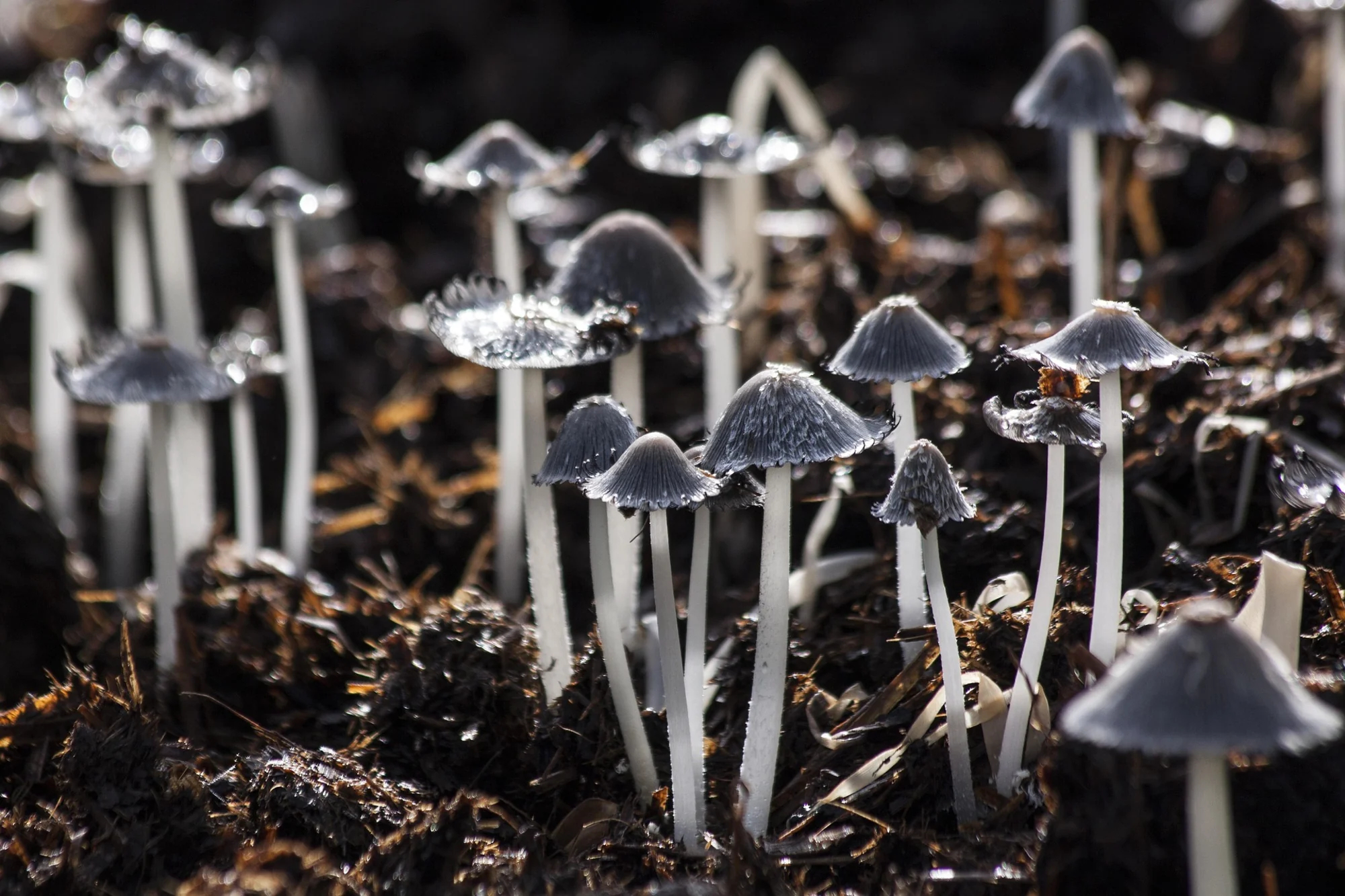
Shop Magic Mushrooms