Johns Hopkins built the labs, the FDA handed over its fast-track label, and the money arrived in trucks. Here is what psilocybin science has actually proven, and what it still hasn't.
A single dose of a compound pulled from a mushroom, handed to someone with terminal cancer, seems to loosen the grip of their dread for months. That is the sentence that built an industry. It also happens to be true, at least in the studies we have so far. The trouble starts when you read the fine print.
Where the story actually starts
Most people date the psychedelic comeback to Michael Pollan's 2018 book, but the lab work is older than that. In 2000, a group at Johns Hopkins became the first team in the United States to win regulatory approval to give a classic psychedelic to healthy volunteers who had never touched one. Six years later they published a study on psilocybin and what they called mystical-type experiences. It was careful, it was peer-reviewed, and it quietly reopened a door that had been welded shut since 1970.
The center that made it respectable
Respectability costs money. In 2019, Johns Hopkins launched its Center for Psychedelic and Consciousness Research with seventeen million dollars in private funding, the first center of its kind in the country. Suddenly a subject that had lived on the fringe for fifty years had a home at America's oldest research university. Scientific American noted the whole point of the place, to drag a field that had flirted with mysticism back toward hard data.
The FDA's magic phrase
In 2018, the FDA gave psilocybin-assisted therapy a designation called breakthrough therapy for treatment-resistant depression, then again in 2019 for major depression. It sounds enormous. It is smaller than it reads. The label speeds up the review process for drugs that show early promise. It does not mean the drug works, it does not mean it is safe for the public, and it very much does not reschedule the substance. Psilocybin is still Schedule I under federal law, filed next to heroin. Two things can be true at once.
What the trials actually measured
The good results are real, and they are narrow. Johns Hopkins researchers reported that psilocybin helped some cancer patients with anxiety, and helped some smokers quit at rates that embarrassed the patch. Other groups have logged strong signals for depression. The center's roster now stretches to anorexia, Alzheimer's-related depression, obsessive-compulsive disorder, and alcohol use disorder. These are not fringe outcomes, and the people running them are not cranks. But the studies are mostly small, the follow-up windows are short, and the people who volunteer for a psychedelic trial are, by definition, people who already like the idea of psychedelics. That last part matters more than it sounds. You can browse the current roster yourself on ClinicalTrials.gov and count how many entries read "recruiting" rather than "completed." A field can be busy and still be early.
The blinding problem nobody loves talking about
Here is the part the press releases skip. In a normal drug trial, neither the patient nor the doctor knows who got the real pill. With psilocybin, everyone knows within about twenty minutes. The ceiling starts breathing. The blinding falls apart, which means expectation does a lot of quiet work on the results. If you were told you might get a life-changing medicine, and then the room turned to liquid, you are primed to report a life change. Good researchers know this. It is why the honest ones keep saying the same cautious thing.
The money got there first
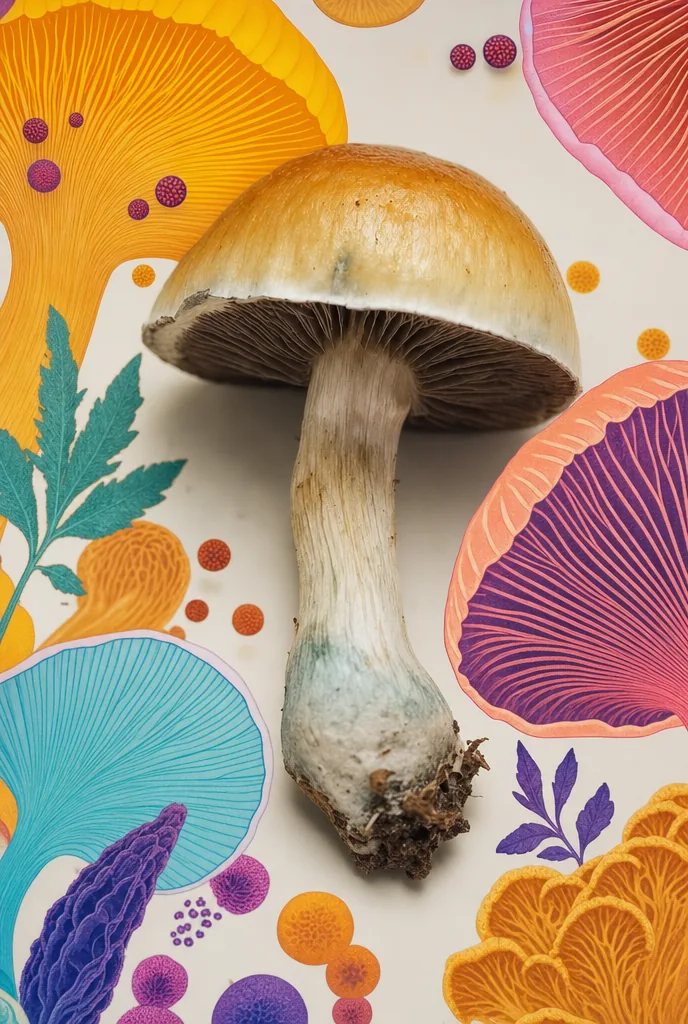
Investors do not wait for Phase 3. Companies like Compass Pathways poured resources into proprietary psilocybin formulations, chasing the day the compound gets rescheduled and marketed. Whole conferences now exist for the business side, complete with panels and open bars. The pitch decks moved faster than the peer review, which is how these things always go. That gap, between what the science has shown and what the market has already priced in, is where most of the hype lives. When a founder tells you a mushroom will fix depression at scale, remember that he has options vesting, and that "at scale" is doing an awful lot of work in that sentence.
What we genuinely do not know
We do not know the right dose for most conditions. We do not know how long the benefit lasts once the glow fades. We do not know who it hurts, because the trials screen out people with a family history of psychosis, which means the group most likely to be harmed is also the group least studied. That is not a scandal, it is a reasonable safety choice, but it leaves a real hole in what we can honestly claim. The brain-imaging work, going back to the 2012 Carhart-Harris study, gives us a tidy picture of networks going quiet under the drug. It does not tell us why that quiet lifts one person out of despair and drops another into a hole. The harm-reduction literature is blunt about that split.
The part that stays with you
Johns Hopkins now runs a public course on the science, aimed at people who want more than the headlines but can't read a journal article. That instinct, to slow down and check the actual evidence, is the healthiest thing in the whole field. You can start with our plain-language guide to the neuroscience and our breakdown of what the aftermath really looks like before you trust anyone's supplement ad. The renaissance is real. It is also a toddler, and toddlers fall down a lot.
Frequently Asked Questions
Is psilocybin an approved medicine yet? No. It carries FDA breakthrough therapy designation, which only speeds up review. It is still a Schedule I substance and is not approved for general medical use. Outside of clinical trials and a couple of state programs, it remains illegal under federal law.
What does "breakthrough therapy" actually mean? It is a label the FDA gives to drugs that show early promise, meant to move the review along faster. It signals potential, not proof, and it does nothing to reschedule the drug or make it legal to buy.
What conditions is it being studied for? Trials have looked at treatment-resistant depression, anxiety in people facing terminal illness, smoking and alcohol use, and more recently anorexia and obsessive-compulsive disorder. The signals are encouraging, but most studies are small and short.
Why do skeptics push back on the results? Blinding is nearly impossible, since people know within minutes whether they got the real dose. That lets expectation shape the outcome, which makes it hard to separate the medicine from the belief in it.
Can I take part in a trial? Some studies are recruiting, and you can search current ones on ClinicalTrials.gov. Screening is strict, and most trials exclude people with a personal or family history of psychosis.
Ready to apply what you've learned?
Browse lab-tested magic mushrooms, edibles, microdose capsules and teas — shipped discreetly across the United States.