"Set and setting" is the most repeated phrase in psychedelics and the least understood. It is not a vibe. It is the closest thing the field has to a seatbelt, and even seatbelts have limits.
You cannot read three sentences about psychedelics without hitting the phrase "set and setting." It gets repeated like a charm, usually by people who have never defined it. So here is the plain version. Set is your head. Setting is the room. Both of them steer the experience harder than the drug does, and ignoring either one is how good trips go bad.
Where the phrase came from, and why it stuck
The idea is old, popularized in the psychedelic research of the 1960s and rebuilt into modern clinical protocols. Every serious treatment framework still leans on it. Set covers your mindset walking in, your mood, your expectations, whatever you are quietly dreading. Setting covers the physical space, the lighting, the music, and the people around you. The reason clinicians obsess over both is simple. Psilocybin does not add a fixed experience to your brain. It amplifies whatever is already there, then removes your ability to look away.
The risk that actually matters is psychological
People assume the danger with mushrooms is physical, like an overdose. That is mostly not the concern. The primary risk with psilocybin is psychological, not a toxic dose. The body tolerates it better than most legal drugs. The mind is the fragile part. That flips the whole safety conversation. You are not guarding against your liver failing. You are guarding against your own thoughts turning on you for six hours with no exit.
Some people should not do this at all
Harm reduction starts with a hard filter. A personal or family history of schizophrenia, psychosis, or bipolar disorder is generally treated as a reason to stay away, because an intense psychedelic experience can push a vulnerable brain somewhere it does not come back from easily. The catch, and it is a real one, is that these same people get excluded from the clinical trials, so the evidence on exactly how much risk they face stays thin. Thin evidence is not the same as safe. When researchers do not know, the responsible move is caution, not optimism.
The drug-interaction stuff is not a rumor
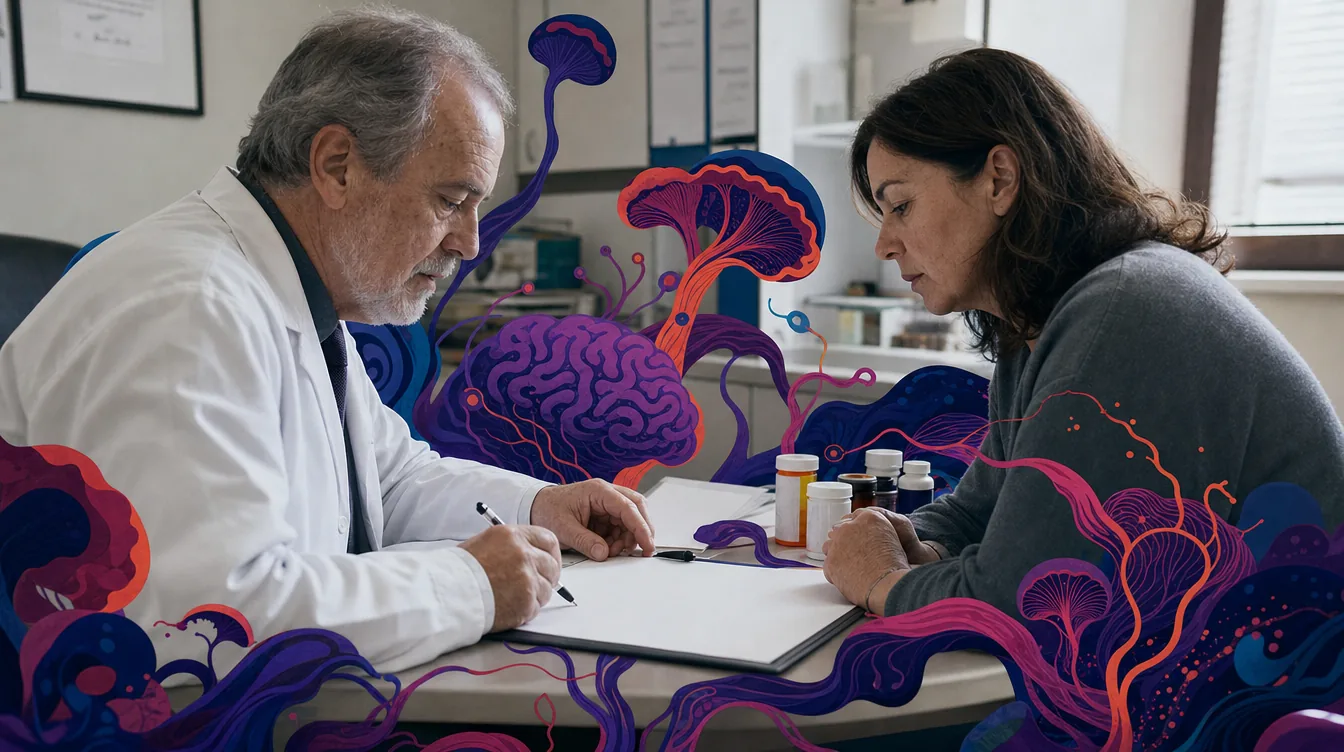
There are combinations that clinicians flag hard. Prescription drugs like lithium and certain antidepressants change the effect in unpredictable and sometimes dangerous ways, which is why the literature treats some of them as outright contraindications. There are also real, if temporary, bumps in heart rate and blood pressure, which turns a pre-existing heart condition into a genuine concern. None of this is scaremongering. It is the boring medical fine print that the wellness marketing tends to leave off the label. Anyone on prescription medication needs a doctor in the loop, full stop.
The "bad trip" is a feature, not a glitch
Here is the number that stops people short. In a survey of nearly two thousand people who had a difficult psilocybin experience outside a clinic, over a third called it one of the most challenging events of their lives. Read that again. Not unpleasant. Among the hardest things that had ever happened to them. The same survey found that most of those people still reported lasting positive change afterward, which is the strange, genuine paradox at the center of all this. The hard experience and the benefit are not opposites. Sometimes they are the same event.
Why the setting does so much work
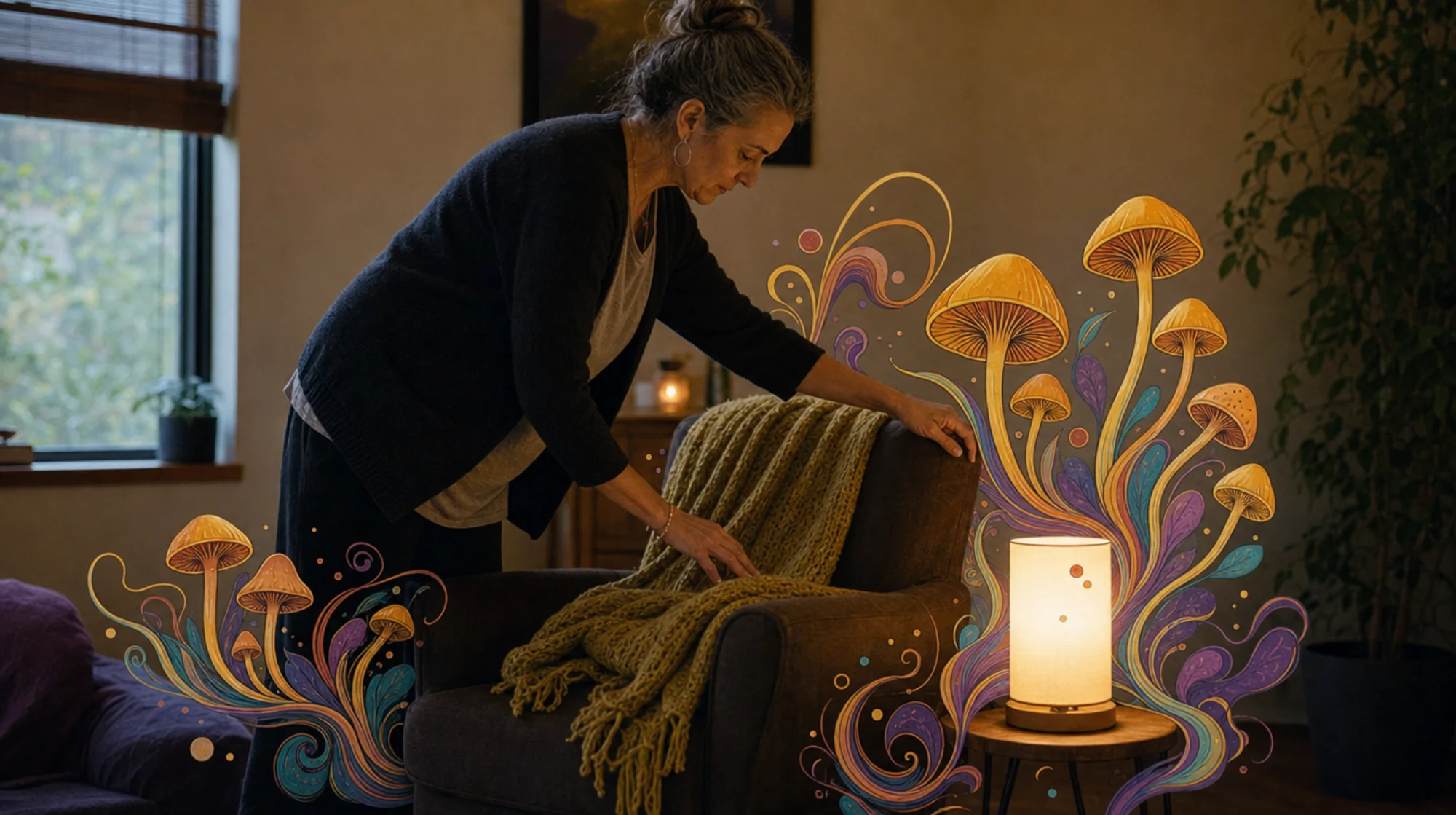
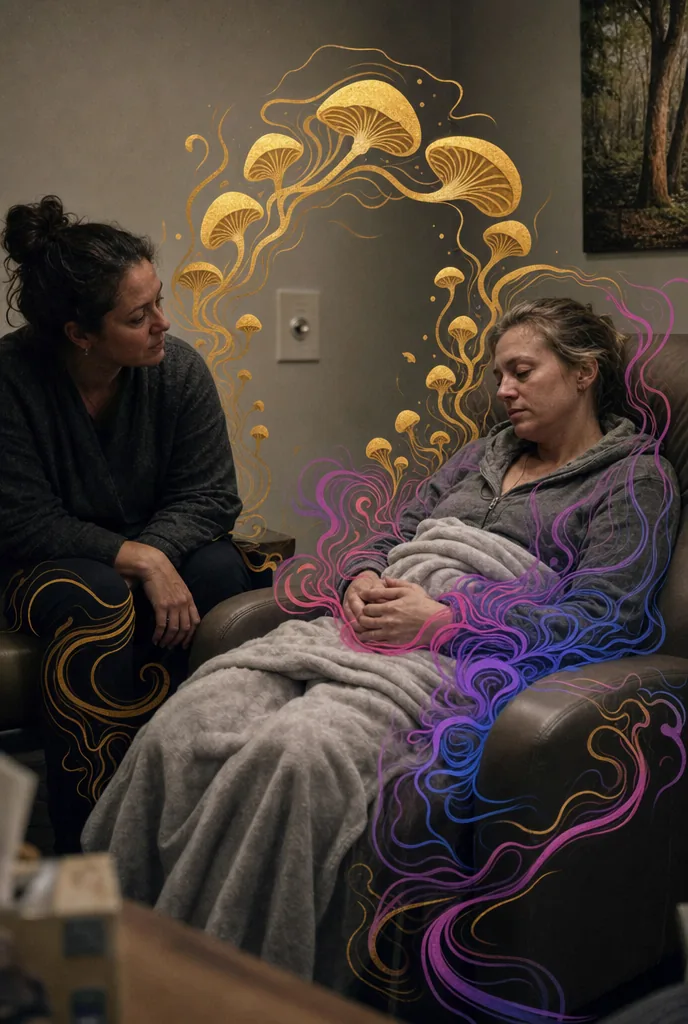
The harm-reduction research keeps landing on the same practical findings. Difficult experiences cluster around a few things. Mixing psilocybin with alcohol or other drugs. Taking too much for the situation. Being somewhere loud, chaotic, or unfamiliar. Being alone with no one sober nearby. A scoping review of naturalistic use found that people already do quiet things to protect themselves, like arranging a calm space and a trusted person to sit with them. The sober sitter is not a hippie affectation. It is the single most reliable piece of harm reduction anyone has.
Integration is the part everyone skips
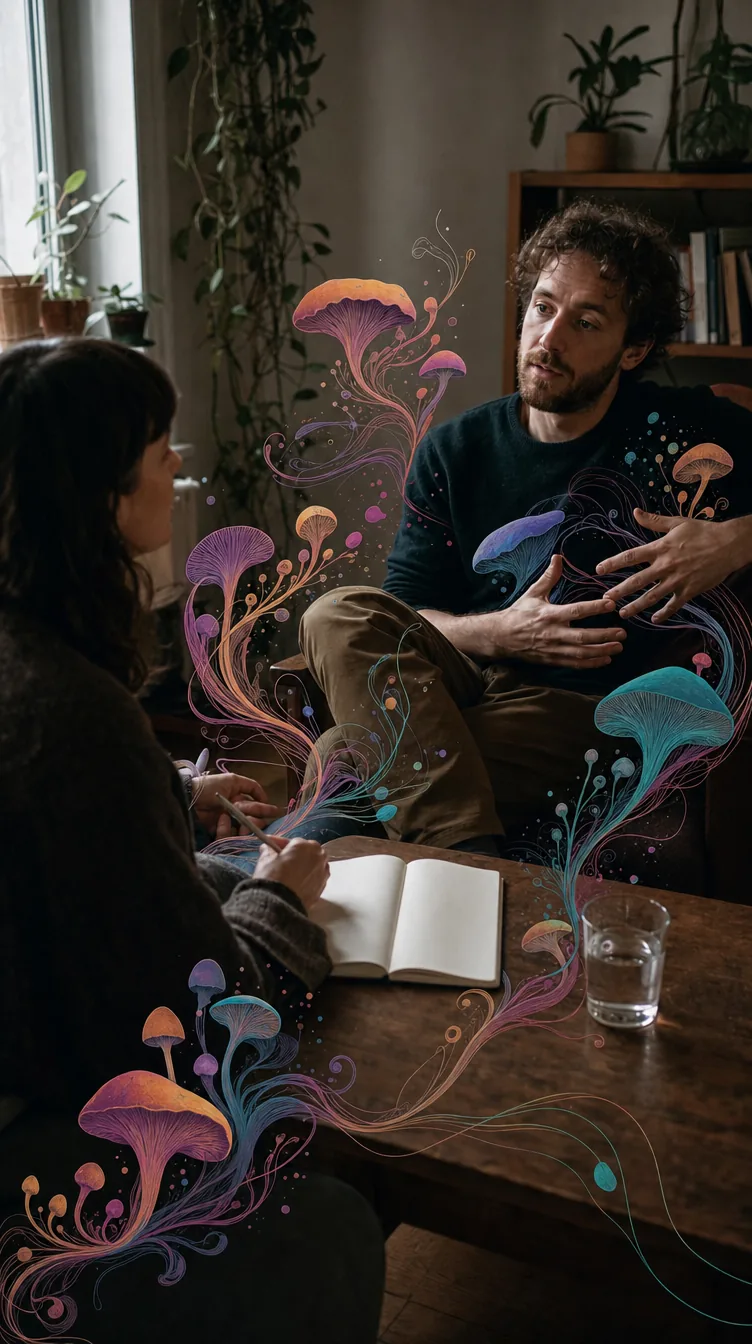
The experience does not end when the visuals do. The clinical world calls the aftercare "integration," which just means making sense of what happened instead of shoving it in a drawer. People in trials who got dosed and then left without follow-up support reported feeling alienated and raw afterward. The insight, if there was one, needs somewhere to land. A journal, a therapist, a friend who will actually listen. Skipping this step is how a profound afternoon curdles into a confusing week.
The honest bottom line
Even Johns Hopkins, which built its reputation on this research, keeps a page of cautions front and center. That should tell you something. The people who know the most are the least breathless about it. "Natural" is not a safety rating. Set and setting is not a slogan, it is the difference between a hard experience you grow from and one that follows you home. Our guide to dosing and starting slow and our piece on what integration looks like go deeper than a caption ever will. This is a heavy subject, and it touches mental health directly. If you or someone you know is struggling, a licensed professional is worth more than any article.
Frequently Asked Questions
What does "set and setting" mean? Set is your mindset walking in, including your mood and expectations. Setting is the physical and social environment around you. Together they shape the experience more than the dose does.
Who should avoid psilocybin entirely? People with a personal or family history of psychosis, schizophrenia, or bipolar disorder are generally advised against it, as are people with certain heart conditions. Anyone taking prescription medication should speak with a doctor first, since some combinations are dangerous.
Are difficult experiences actually risky? They can be deeply distressing. In one large survey, more than a third of people who had a hard experience called it among the most challenging events of their lives, though many also reported lasting benefit afterward. The main risk is psychological rather than physical.
What is a trip sitter? A sober, trusted person who stays present throughout the experience. It is one of the most reliable harm-reduction steps available.
What is integration, and why does it matter? It is the work of making sense of the experience afterward, through journaling, therapy, or honest conversation. Skipping it can leave people feeling raw and disconnected, even when the experience itself was positive.
Where can I turn if I am struggling? This subject touches mental health directly. A licensed professional is worth more than any article, and if you or someone you know is in crisis, reach out to local emergency or crisis services right away.
Ready to apply what you've learned?
Browse lab-tested magic mushrooms, edibles, microdose capsules and teas — shipped discreetly across the United States.